
The best things to do in Bhubaneswar are seeing the great temples of the Temple City, above all the Lingaraj and Mukteshwar, the ancient Udayagiri and Khandagiri caves, and the Dhauli peace pagoda from the Kalinga war, then day-tripping to the Konark Sun Temple and the Jagannath Temple and beach at Puri, the famous Golden Triangle of Odisha. The city itself is compact and central, so most of it is within easy reach.
Bhubaneswar is the Temple City of India, the capital of Odisha and the gateway to one of the country's richest and least-crowded cultural circuits. It once had thousands of temples, and the finest of them still stand, alongside ancient caves, the great Ashokan site at Dhauli, and the two icons a short drive away, the Sun Temple at Konark and the Jagannath Temple at Puri. We run a hotel in central Bhubaneswar, near the railway station and the airport, so this guide is written from the middle of it, telling you what is close in the city, what is worth a day trip, and how to plan the Golden Triangle so you see the best of Odisha without rushing.
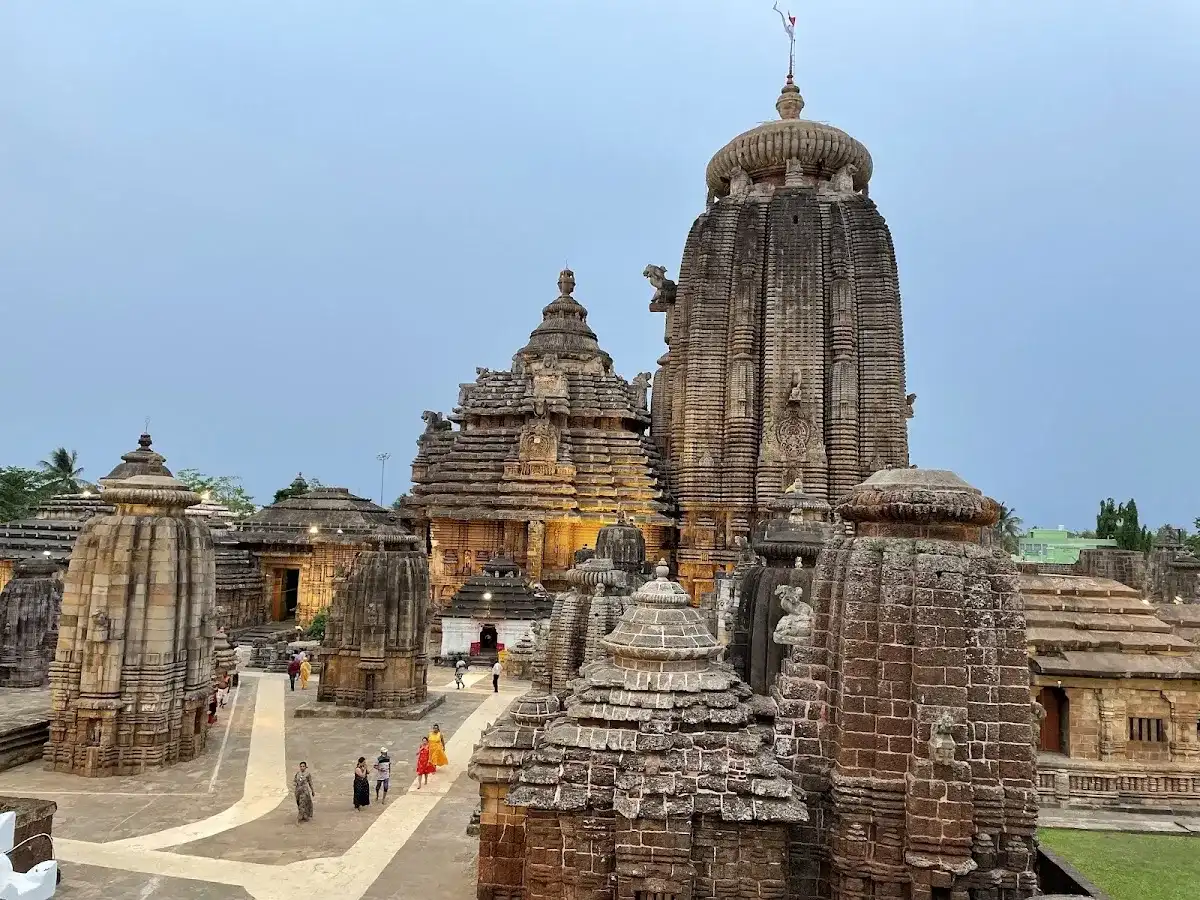
Bhubaneswar is a compact, well-planned city in Odisha in eastern India, known as the Temple City for its great Kalinga-style temples. IRA by Orchid sits centrally at Laxmisagar on the Cuttack-Puri road, about 1.5 kilometres from the railway station and 5 kilometres from Biju Patnaik International Airport, close to the city's temples, museums and business hubs and well placed for the Konark and Puri day trips.
Bhubaneswar is one of India's more manageable cities, the capital of Odisha, twinned with the older city of Cuttack, a short way north. It carries two identities at once: the ancient Temple City, with some of the finest temple architecture in India, and a modern, growing capital with IT parks at Infocity and Patia, commercial hubs and a calm, liveable feel. For a visitor, the happy result is that the great heritage sights and the practical conveniences sit close together in a city that is easy to get around.
Location is one area where this property does not require any compromise. IRA by Orchid sits at Laxmisagar on the Cuttack-Puri main road, placing it 1.5 kilometres from Bhubaneswar Railway Station, 5 kilometres from the airport, and one kilometre from NH-5 towards Cuttack. Temples, the Odisha State Museum, and the city's key business districts are all close without requiring significant travel time in either direction. The positioning also works well for anyone planning trips to Konark and Puri, since the roads to both destinations run directly from this part of the city rather than through it. Travellers thinking through their Bhubaneswar hotel booking with day trips in mind will find the logistics considerably simpler from here than from properties on the other side of the city. Book your stay at IRA by Orchid Bhubaneswar directly to check live rates and secure the Orchid Rewards discount on your reservation.
A word on how the city is laid out, because it helps with planning. The old town, around the Lingaraj and the Bindusagar tank to the south, is where most of the great temples cluster. The newer, planned city spreads north and east, with the administrative areas, the markets of Master Canteen and Sahid Nagar, and the IT zones of Patia and Infocity. The railway station and our Laxmisagar location sit centrally between the two, which is the practical sweet spot: close to the old-town temples, easy for the modern city and the transport, and on the right side for the highways out to Konark, Puri and Cuttack. Bhubaneswar is also a notably green and clean city by Indian standards, planned in the 1940s, so getting around is calmer than in most places of its size.
The best things to do in Bhubaneswar are visiting the Lingaraj, Mukteshwar, Rajarani and Brahmeswar temples, exploring the Udayagiri and Khandagiri caves, seeing the Dhauli peace pagoda and the Odisha State Museum, and day-tripping to Konark and Puri. Add the Nandankanan zoo for families and the Odia food and crafts, and you have a full and varied few days.
Bhubaneswar rewards a few days more than a single one, because the sights split into the city and the day trips. In the city itself are the temples, the most concentrated and important being the Lingaraj, plus the jewel-like Mukteshwar and several others; the ancient Udayagiri and Khandagiri caves; the Dhauli hill with its Ashokan history and white peace pagoda; and the museums. A short drive out lies the Golden Triangle's other two corners, the Sun Temple at Konark and the Jagannath Temple and beach at Puri. For families, there is the large Nandankanan zoo, and throughout, there is the distinctive Odia food and craft tradition. The sections below take each with real distances and honest advice. For a central base for all of it, you can check the IRA Bhubaneswar room types and rates.
A useful way to frame a Bhubaneswar trip is by what draws you, because the city serves several kinds of travellers well. The heritage and architecture lover comes for the temples and Konark, and will visit the city sights and the Sun Temple. The pilgrim and the spiritually inclined centre their trip on the Lingaraj and the Jagannath Temple at Puri. The family leans on Nandankanan, the beach and the science centre. The craft and culture enthusiast heads for Raghurajpur, Pipili and the Odissi dance. And the business traveller works in the city and adds a day trip if time allows. Most visitors blend several of these, and the happy fact about Bhubaneswar is that the compact, central geography lets you mix them without the long cross-city drives that bigger destinations force on you.
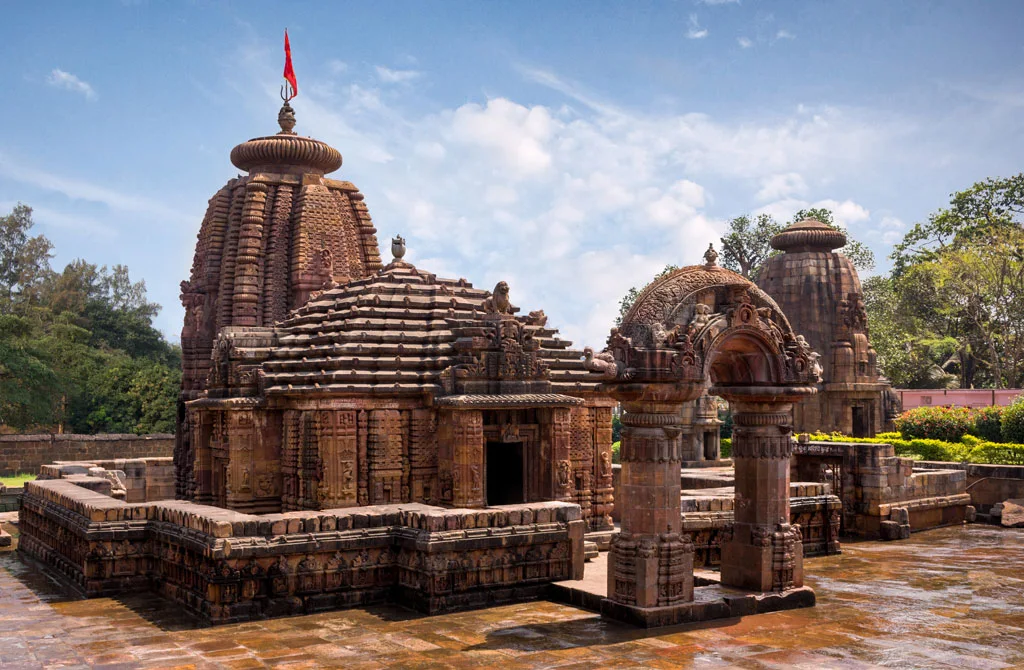
Bhubaneswar's temples are its glory: the great Lingaraj Temple, about 5 kilometres from the hotel, the finest example of Kalinga architecture; the small, exquisitely carved Mukteshwar with its famous arched gateway; and the Rajarani, Brahmeswar and Parasurameswar temples nearby. Together they form the Temple City, the densest collection of classical temple art in India.
This is what gives Bhubaneswar its name and its soul. At the centre stands the Lingaraj Temple, an 11th-century giant dedicated to Shiva, its 55-metre tower rising over the old town, the masterpiece of the Kalinga style and still a living place of worship, about 5 kilometres from the hotel. Note that, as with several active temples here, non-Hindus are not permitted inside the main complex, though there is a viewing platform alongside that gives a good look.
The connoisseur's favourite is the Mukteshwar Temple, a small 10th-century gem famous for its delicately carved torana, the arched gateway, and its dense, beautiful stonework, often called the gem of Odisha architecture. Around it are the Rajarani Temple, set in gardens and known for its sculptural carving, the large Brahmeswar Temple, and the early Parasurameswar Temple, among the oldest in the city. You can see the key ones in a half to full day. Go in the morning for the light and the calm, dress modestly, and take a guide or a good description, because the carving rewards a close, informed look. For ease of returning between temple visits, it helps to be based centrally at IRA Bhubaneswar.
A little context makes the temples far more rewarding. Bhubaneswar's shrines trace the evolution of the Kalinga school of architecture over roughly seven centuries, from the early, modest Parasurameswar of the 7th century, through the perfectly proportioned Mukteshwar and the sculptural Rajarani, to the towering culmination of the Lingaraj. You can literally read the style maturing as you move between them, the towers growing taller, the carving more confident. The recurring elements to look for are the curved deul, the spire over the sanctum, and the jagamohana, the pyramid-roofed assembly hall before it. Around the old city the Bindusagar tank and dozens of smaller shrines complete the picture. Even for a visitor with no religious interest, this is one of the great open-air museums of Indian art, and an hour with a knowledgeable guide turns a row of old buildings into a story you will not forget.
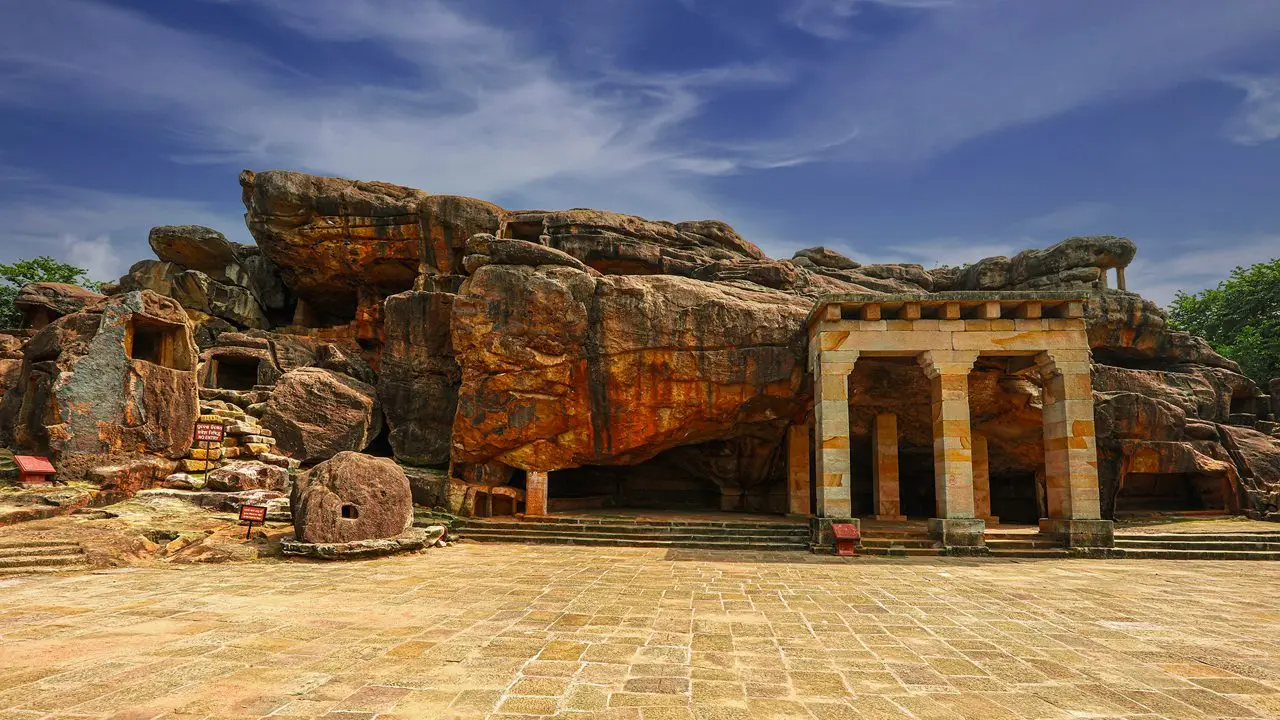
The Udayagiri and Khandagiri caves, about 9 kilometres from the hotel, are a group of ancient rock-cut caves carved for Jain monks over 2,000 years ago. Set on two facing hills, they hold carved cells, inscriptions and sculpture, including the historically important Hathigumpha inscription, and give wide views over the city. They make an easy, rewarding half-day.
A short way west of the city centre, the twin hills of Udayagiri and Khandagiri hold one of Odisha's most important ancient sites. These are rock-cut caves, hewn out for Jain ascetics in the 1st and 2nd centuries BCE under King Kharavela, a honeycomb of monks' cells, some plain, some richly carved with figures, animals and scenes. Udayagiri, the larger hill, has the finest of them, including the double-storeyed Rani Gumpha, the queen's cave, and the famous Hathigumpha inscription that records Kharavela's reign, a key document of ancient Indian history.
Across the road, Khandagiri has further caves and a Jain temple at the top, with sweeping views over Bhubaneswar that reward the short climb. The site is about 9 kilometres from the hotel, an easy trip, and a couple of hours is enough to take in both hills. Go in the cooler morning, wear shoes you can climb in, and watch for the resident monkeys. It is a quieter, older counterpoint to the temples, and one of the most atmospheric places in the city.
What makes the caves special is their age and their purpose. These were not grand monuments but living quarters, simple cells cut into the rock where Jain monks sheltered, some so low you must stoop to enter, which gives them an intimacy the great temples lack. The carving on the finer caves, dancers, processions, hunting scenes, and royal life is among the earliest figurative sculpture in this part of India, a window into the world of King Kharavela over two thousand years ago. Combined with the views from Khandagiri and the resident langurs, it is an easy, atmospheric stop that adds real historical depth to a Bhubaneswar trip, and a good contrast in mood to a morning of temples.
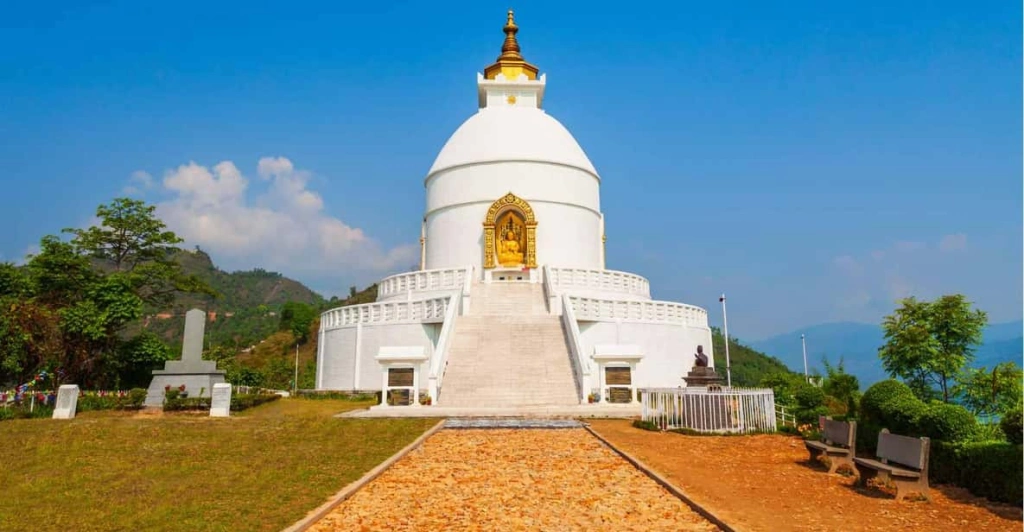
Dhauli hill, about 8 kilometres south of the city, is where the emperor Ashoka fought the bloody Kalinga war and then turned to Buddhism and peace, marked today by his rock edicts and a white peace pagoda. In the city, the Odisha State Museum, about 2.5 kilometres from the hotel, and the Tribal Museum hold the state's rich art, sculpture and tribal heritage. Together they tell Odisha's deep story.
For the history that shaped this region, Dhauli is the place to go. It was on the plains near here, around 261 BCE, that Ashoka's army won the terrible Kalinga war, a victory so bloody that, by tradition, it turned the emperor from conquest to Buddhism and non-violence. His rock edicts, carved into the stone with a sculpted elephant, still stand at the foot of the hill, and the gleaming white Shanti Stupa, a peace pagoda built in the 1970s on the hilltop, makes a serene and meaningful stop about 8 kilometres south of the city.
In the city itself, the Odisha State Museum, around 2.5 kilometres from the hotel, is well worth a couple of hours for its sculpture, palm-leaf manuscripts, coins and tribal galleries, a good grounding in the state's art and history. The Museum of Tribal Arts and Artefacts gives a window into Odisha's many indigenous communities, one of the most distinctive aspects of the state. The nearby Odissi Research Centre is the home of Odisha's classical dance. For anyone who likes their travel with context, this layer of history and culture is one of Bhubaneswar's real strengths.
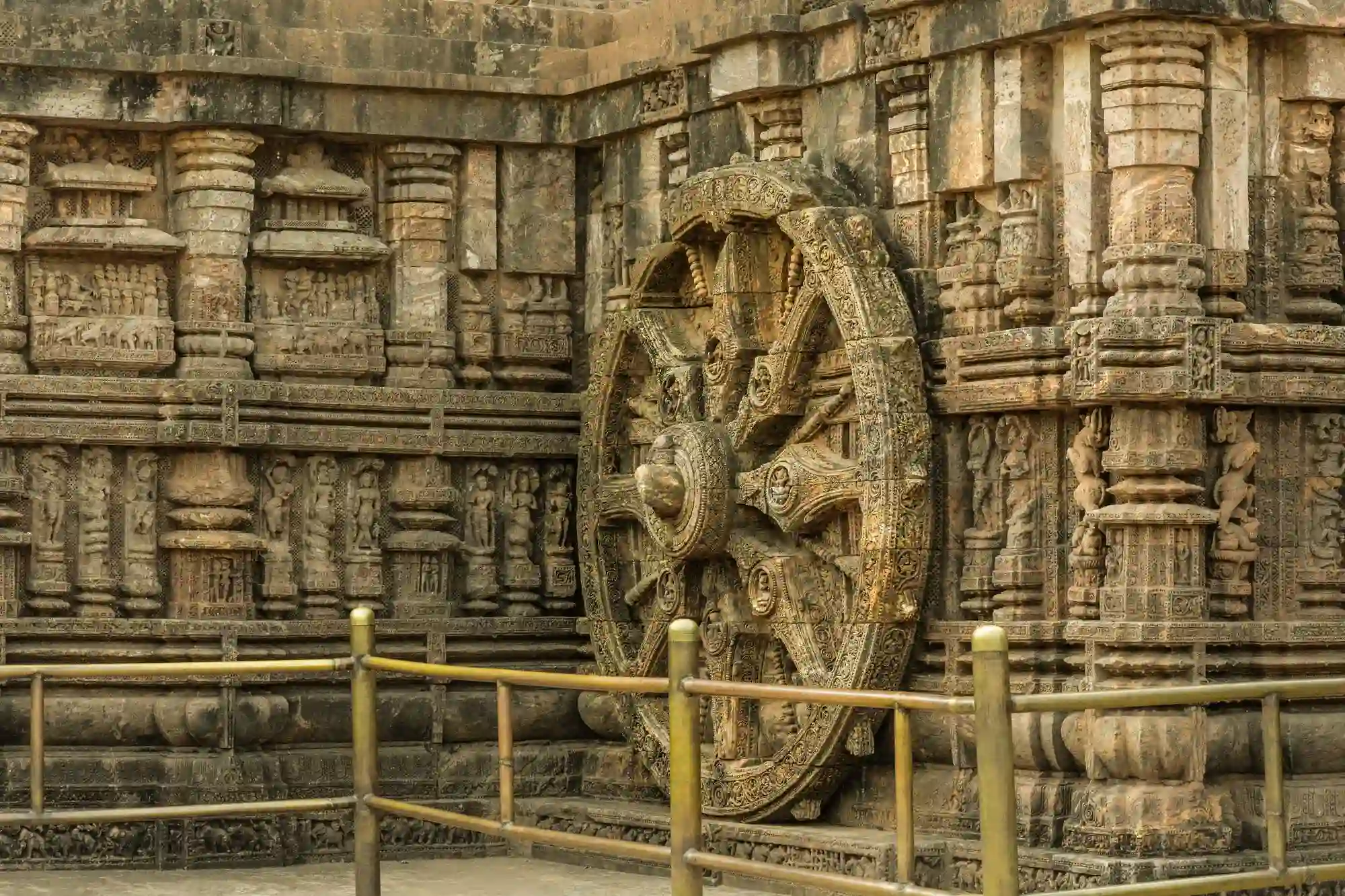
Bhubaneswar, Konark and Puri form the Golden Triangle of Odisha. The Konark Sun Temple, a UNESCO World Heritage site shaped as a giant stone chariot, is about 65 kilometres and 90 minutes away. Puri, with its revered Jagannath Temple and long beach, is about 60 kilometres away and takes 90 minutes. Both are comfortable day trips from a central Bhubaneswar base, often combined in one.
The reason to base yourself in Bhubaneswar is that the two greatest sights in Odisha are an easy drive away, and the city is the natural hub for both. The Konark Sun Temple, about 65 kilometres east near the coast, is the showstopper, a 13th-century temple built as a colossal stone chariot of the sun god, its wheels and horses and walls covered in some of the most extraordinary carving in India, and rightly a UNESCO World Heritage site. It is roughly 90 minutes by road, and the carving alone justifies the trip.
Puri, about 60 kilometres south, is the other corner, a holy city built around the great Jagannath Temple, one of the four sacred Char Dham pilgrimage sites and the home of the world-famous Rath Yatra chariot festival, alongside a long sweep of beach that draws both pilgrims and holidaymakers. Note that the main Jagannath temple is open to Hindus only, though the town, the beach and the atmosphere are open to all. Many visitors do Konark and Puri together on the scenic Marine Drive coastal road in one long day, or split them across two; either way, a central Bhubaneswar base makes the Golden Triangle simple, and you can return to a comfortable room at IRA Bhubaneswar by evening.
A few practical notes for the day. If you can manage only one, make it Konark, because the carving there is simply without equal in the region, and aim to arrive by mid-morning before the heat and the tour buses; a guide is well worth it to read the chariot's wheels, the erotic and everyday sculptures, and the astronomy built into the design. At Puri, the beach is an easy pleasure, good for a walk and a paddle, while the Jagannath Temple dominates the town spiritually, even though non-Hindus see it only from outside. The drive between the two along the Marine Drive coastal road is itself a highlight, running past casuarina groves and quiet beaches. Carry water and sun protection, start early, and treat the day as a marathon rather than a sprint, because covering both with driving is a full day's effort, richly repaid.

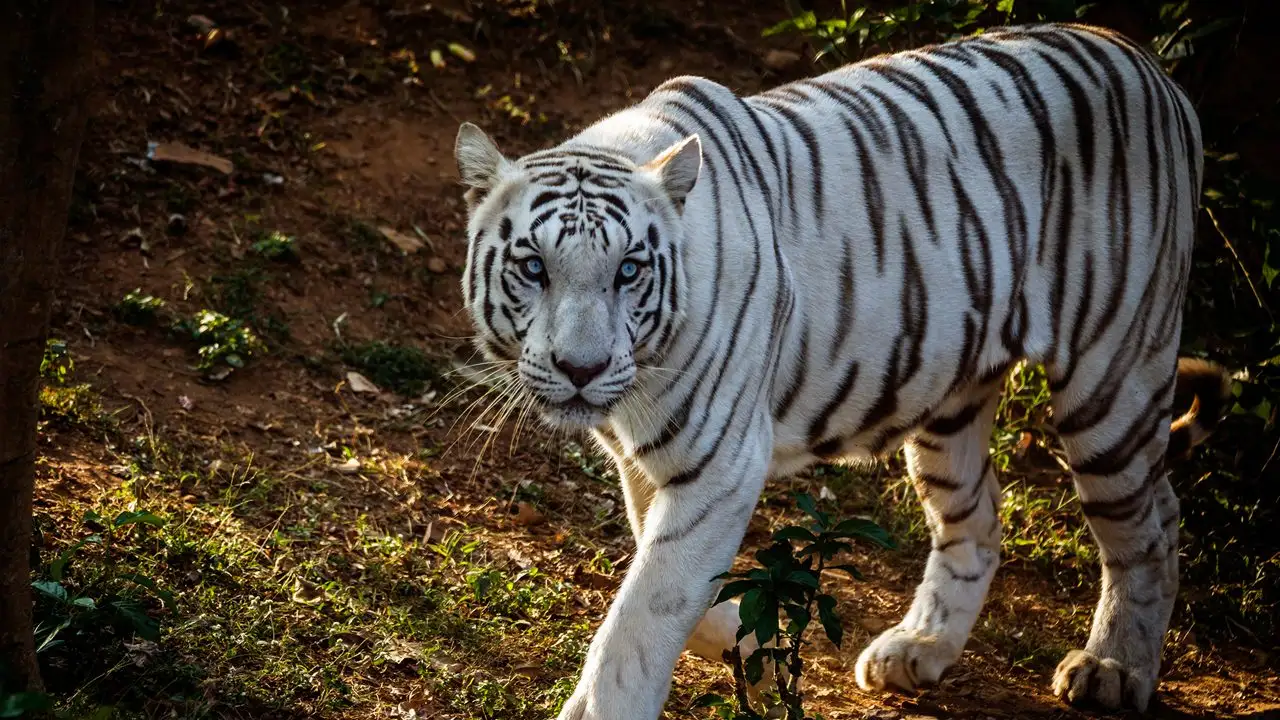
Nandankanan Zoological Park, about 18 kilometres from the hotel, is one of India's best-known zoos, set in a forest around a lake, famous for its white tigers, its lion and white-tiger safaris, a botanical garden and a reptile park. It is a popular full or half-day out for families, and pairs well with the nearby caves on the same side of the city.
For families, Nandankanan is the big draw. Set in natural forest around the Kanjia lake on the northern edge of the city, about 18 kilometres from the hotel, it is far more than a conventional zoo, known especially for its white tigers, for which it has a famous breeding record, and for its drive-through lion and tiger safaris. There is a botanical garden, a reptile park, a lake with boating, and a toy train, easily a half to full day with children.
Because it sits on the same north-western side as the Udayagiri and Khandagiri caves, the two can be combined into one outing if you plan it. Go early to beat the crowds and the heat, especially at weekends when local families fill the park, and allow plenty of time, as the grounds are large. For a family trip to Bhubaneswar, Nandankanan is usually the children's highlight, and a good balance to the temples and history that fill the rest of the itinerary.
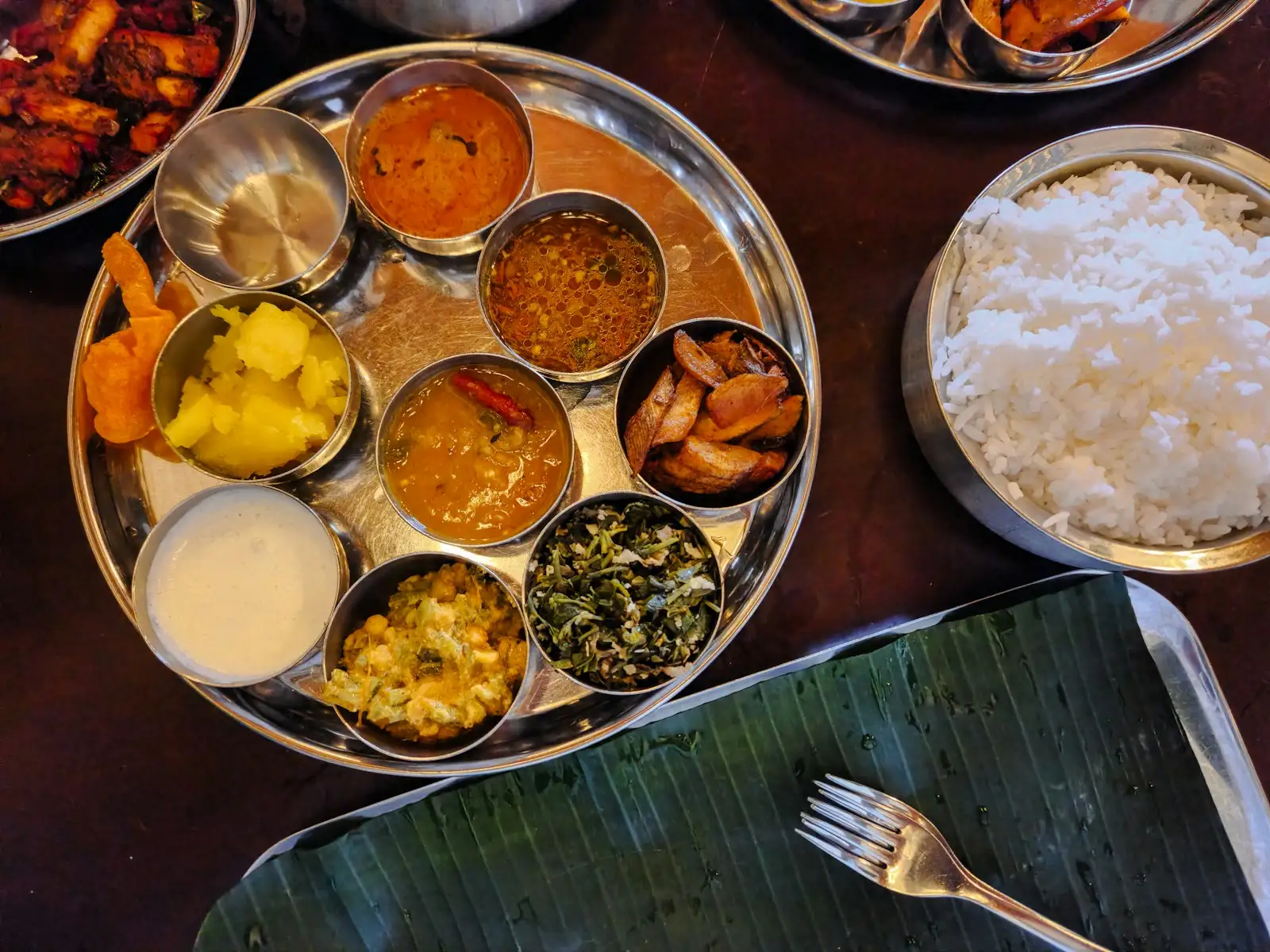
Odia food is a gentle, distinctive cuisine worth seeking out: the lentil-and-vegetable dalma, the summer favourite pakhala bhata of fermented rice, fish and seafood dishes, and the state's famous sweets, the baked chhena poda and the rasagola that Odisha claims as its own. The hotel's restaurant, The Melting Pot, serves Odia and wider Indian and global food, including vegetarian and non-vegetarian dishes.
Odisha's cuisine is one of India's underrated regional kitchens, subtle and home-style rather than heavy, and Bhubaneswar is a good place to try it. The everyday hero is dalma, lentils cooked with vegetables and tempered with spices, eaten with rice; in the summer months, locals turn to pakhala bhata, rice fermented in water and served cool with fried sides, a refreshing answer to the heat. Being a coastal state, Odisha does fish and seafood well, with mustard-based curries like macha besara a highlight.
Save room for the sweets, because this is a sweet country. Chhena poda, a baked caramelised cheese dessert, is Odisha's signature, and the state lays a proud claim to the origin of the rasagola, with the Pahala variety on the Bhubaneswar-Cuttack road especially famous. The temple mahaprasad at Puri, cooked in earthen pots and offered at the Jagannath Temple, is a food experience in itself for those who visit. For dining without leaving the hotel, our own restaurant, The Melting Pot, serves a spread of Odia, Indian and international dishes, vegetarian and non-vegetarian, with signature plates and a relaxed poolside setting. Seek out at least one proper Odia thali while you are here, because it is the taste of the place.
A few more things worth trying. The Odia thali is the best single introduction, a steel platter that typically brings rice, dalma, a couple of vegetable preparations, a dal, a fried item, chutney, pickle and a sweet, balanced and not overly spiced. Street snacks have their own charm, from the dahi bara aloo dum, a Cuttack speciality of lentil dumplings in yoghurt with potato curry, to the gupchup, the local name for pani puri. For the sweet tooth beyond chhena poda and rasagola, look for chhena jhili and rasabali. And if you visit Puri, the Jagannath Temple's mahaprasad, vegetarian food cooked in stacked earthen pots over wood fires and served at the Ananda Bazaar, is as much a cultural experience as a meal. Odia food is gentle and may seem understated next to flashier cuisines, but give it a few meals, and its quiet, home-style depth wins you over.
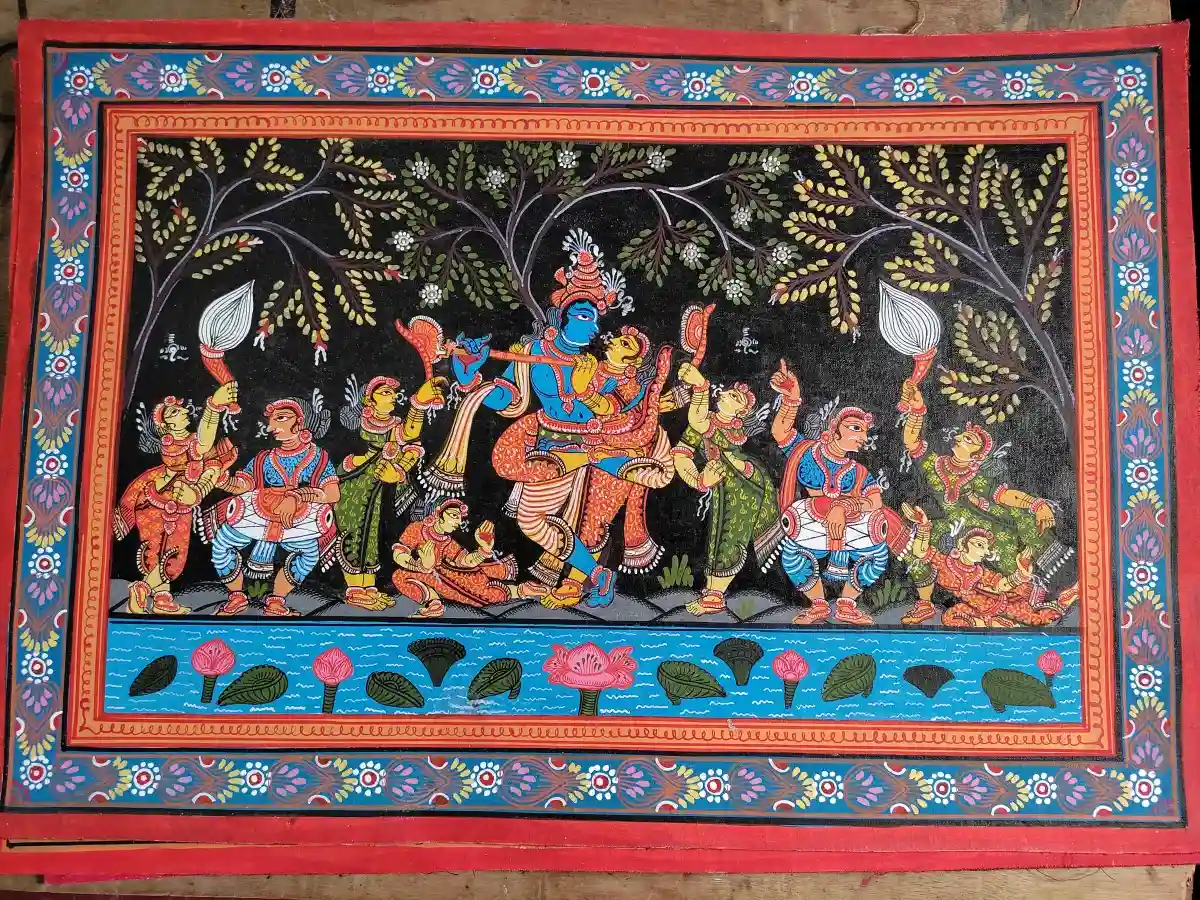
Odisha is one of India's great craft states. Near Bhubaneswar, you can shop for the applique work of Pipili on the Puri road, the pattachitra scroll paintings of the artists' village of Raghurajpur near Puri, Odisha's famous handloom ikat sarees, and silver filigree from nearby Cuttack. Ekamra Haat in the city is a good one-stop craft market for all of it.
Shopping here means crafts, and they are exceptional. The village of Pipili, on the road to Puri, is famous across India for its bright applique work, the stitched and patterned fabric used for canopies, bags and hangings, and the roadside shops are a riot of colour. Further on, near Puri, the artists' village of Raghurajpur is the home of pattachitra, the intricate traditional scroll painting on cloth and palm leaf, where you can watch the artists at work and buy directly, one of the most rewarding craft stops in the country.
Odisha is also celebrated for its handloom, the ikat and bomkai sarees and fabrics, and the nearby city of Cuttack for its delicate silver filigree, tarakasi. In Bhubaneswar itself, Ekamra Haat is a permanent open-air craft market that brings much of this together in one place, a good and fair option if you do not have time for the villages. For souvenirs with real meaning, the crafts of Odisha are far more rewarding than anything mass-produced, and they make this corner of India a quietly brilliant place to shop.
The best time to visit Bhubaneswar is October to February, the cool, dry, pleasant season, ideal for the temples, caves and day trips. The famous Rath Yatra at Puri falls in June or July, and the Konark Dance Festival in December. Summer, March to June, is hot and humid, and the monsoon, July to September, is green but wet, so winter is the easy choice.
The season matters in this hot, coastal part of India, so plan around it.
Winter, from October to February, is by far the best time. The weather is cool, dry and pleasant, perfect for the temples, the caves, Dhauli and the day trips to Konark and Puri, all of which involve being outdoors. This is also when the Konark Dance Festival lights up the Sun Temple in December, a wonderful time to visit. The whole season is comfortable and is the right window if your dates are flexible.
Summer, from March to June, is hot and humid and best avoided for heavy sightseeing, though the pool and early starts make it manageable. The monsoon, July to September, brings heavy rain and a green landscape, and it is also the season of Puri's spectacular Rath Yatra, usually in June or July, when millions gather to pull the great chariots of Lord Jagannath, an overwhelming and unforgettable spectacle if you can handle the crowds. For a straightforward sightseeing trip, aim for the winter; time it to a festival only if you actively want the intensity.
IRA by Orchid is central, at Laxmisagar on the Cuttack-Puri road. Biju Patnaik International Airport is about 5 kilometres, a 15-minute drive, and Bhubaneswar Railway Station is about 1.5 kilometres, both very close. The NH-5 highway towards Cuttack is a kilometre away. App cabs, autorickshaws and a hired car for the Konark and Puri trips are the practical ways to get around.
Bhubaneswar is easy to reach and easy to move around, which is a big part of its appeal. Biju Patnaik International Airport, well connected to the major Indian cities, is only about 5 kilometres from the hotel, a quick 15-minute drive. Bhubaneswar Railway Station, a major stop on the east-coast line, is just about 1.5 kilometres away, which makes the train a genuinely convenient option, including the scenic Konark Railway and East Coast routes. The NH-5 towards Cuttack runs a kilometre from the hotel.
Around the city, app cabs and autorickshaws are easy ways to get about, and the compact, well-planned layout means journeys are generally short and painless, unlike the bigger metros. For the Golden Triangle, the sensible choice is a hired car with a driver for the day, which lets you do Konark and Puri at your own pace along the coastal road. The honest summary is that this is one of the lower-stress cities in India to navigate, and a central base like ours keeps everything, the city sights, the transport, the highway out to Konark and Puri, within easy reach. To stay near it all, you can book your central Bhubaneswar stay at IRA.
For a weekend in Bhubaneswar, spend one day in the city, the Lingaraj and Mukteshwar temples, the Udayagiri caves and Dhauli, and one day on the Golden Triangle, Konark and Puri together along the coast. On the third day, add Nandankanan zoo, the crafts of Pipili and Raghurajpur, or Chilika Lake. A central base makes the whole circuit easy.
The classic Odisha short trip is built around the Golden Triangle, and it fits neatly into a weekend from Bhubaneswar. Day one is the city: the temples in the morning, the Lingaraj and the exquisite Mukteshwar above all, then the Udayagiri and Khandagiri caves and the peace of Dhauli in the afternoon, with the Odisha State Museum if time allows. Day two is the big day out, Konark and Puri together, driving east to the Sun Temple, on to Puri for the Jagannath Temple and the beach, and back along the coastal Marine Drive, a full but hugely rewarding day.
With a third day, you have good options: Nandankanan zoo for a family, the craft villages of Pipili and Raghurajpur for shoppers and art lovers, or a longer drive to Chilika Lake, Asia's largest brackish lagoon, about 100 kilometres south, famous for its migratory birds and Irrawaddy dolphins. Throughout, a central Bhubaneswar base keeps the driving sensible and lets you come back to the same comfortable room each night rather than packing and moving. It is one of India's most satisfying and least exhausting cultural circuits, and you can book your Golden Triangle base at IRA Bhubaneswar.
For business travellers, Bhubaneswar is a growing capital with IT parks at Infocity and Patia, commercial hubs around Master Canteen and Sahid Nagar, and the Kalinga Stadium and convention venues. IRA by Orchid's central location, close to the railway, the airport and the NH-5, plus fast Wi-Fi, workspaces and one of the best conference halls in Bhubaneswar, makes it a practical base for corporate trips.
Bhubaneswar is not only a heritage city but a working capital, and a fair share of visitors come for business. The IT and tech sector clusters at Infocity and Patia to the north of the city, there are commercial and trade hubs around Master Canteen, Sahid Nagar and Jaydev Vihar, and the city hosts conferences and events at venues like the Kalinga Stadium and the convention centres. The state administration and a steady stream of corporate and government travel keep the city's hotels busy through the week.
For a work trip, the hotel's central position is an advantage: close to the railway station and the airport for easy arrivals, near the NH-5 for Cuttack and the wider region, and within reach of the main business areas. What a work stay needs is reliability, fast Wi-Fi, proper workspaces, meeting and conference rooms, and good food at the right hours, all of which the hotel covers, with the Senate and Board Room facilities for meetings and The Melting Pot for dining. For a productive, well-connected business stay in the city, you can book a corporate stay at IRA Bhubaneswar.
For families, Bhubaneswar offers the Nandankanan zoo, the Regional Science Centre, the caves and the beach at Puri, with a hotel pool for downtime. For couples, the temples and carvings, a Konark and Puri day, the Odia food, and a relaxed central stay make a calm, culture-rich break away from the usual crowds.
Bhubaneswar works well for families and couples alike, and the variety of things to do means most trips can be shaped around whoever is travelling. Families have plenty to fill several days: Nandankanan Zoo with its white tigers and safari experience, the Regional Science Centre a short drive from the hotel for a hands-on few hours that keeps younger visitors genuinely engaged, the rock-cut caves at Udayagiri and Khandagiri for a more exploratory afternoon, and a day at Puri beach that tends to become the highlight of the trip for children and adults equally. Balancing one main outing each day with pool time back at the hotel keeps the pace manageable without anyone feeling short-changed. Choosing a well-located hotel in Bhubaneswar that sits close to both the city attractions and the roads leading out to Puri and Konark makes this kind of relaxed, varied itinerary far easier to pull off in practice.
For couples, Bhubaneswar offers something different from the usual getaway: a calm, cultured trip built around extraordinary temple art, the drama of Konark, the gentle Odia food and the easy pace of a compact city, without the crowds and cost of the better-known destinations. A day of temples and caves, a Konark and Puri excursion, a good Odia meal, and a relaxed evening make a quietly memorable break for two. Either way, the city rewards a curious, unhurried traveller.
IRA by Orchid Bhubaneswar caters to weddings, conferences and corporate events with the Chamber Hall, a 1,500 square foot banquet for up to 150 guests, the Senate-01 conference hall for up to 100, and a Board Room for 12. With catering from The Melting Pot, audiovisual support and rooms for guests, plus a central location near the railway and airport, it suits both celebrations and corporate functions.
For events, the hotel is well-equipped and well-placed. The Chamber Hall is the main banquet and wedding venue, around 1,500 square feet and seating up to 150 guests, suited to weddings, engagements, receptions and larger social gatherings. For corporate needs, there is the Senate-01 conference hall, about 1,144 square feet for up to 100 guests, good for seminars, workshops and presentations, and an intimate Board Room for up to 12 for meetings and board discussions.
What makes it practical is the package around the spaces: catering from The Melting Pot with customisable menus, audiovisual support, dedicated event coordination, and rooms on site so guests stay where the function is. The central location, close to the railway station, the airport and the NH-5, makes it easy for families and delegates arriving from across Odisha and beyond. For a wedding, conference or corporate event in the city, the in-house team can plan it, and you can enquire about events and rooms at IRA Bhubaneswar.
Odisha's great festivals are the Puri Rath Yatra in June or July, when millions pull the giant chariots of Lord Jagannath, and the Konark Dance Festival in December, set against the Sun Temple. Bhubaneswar also celebrates Raja, the Odissi classical dance tradition, and tribal fairs like the Adivasi Mela, giving any visit a strong cultural layer.
Odisha's culture runs deep, and its festivals are among the most powerful in India. The greatest is the Puri Rath Yatra, usually in June or July, when the deities of the Jagannath Temple are brought out, and millions of devotees pull three enormous wooden chariots through the streets of Puri, the origin of the very word juggernaut, an overwhelming spectacle for anyone who witnesses it. In December, the Konark Dance Festival fills the grounds near the Sun Temple with India's classical dance forms under the open sky, one of the most beautiful cultural events in the country.
Closer to home, Bhubaneswar marks Raja, a uniquely Odia festival celebrating womanhood and the monsoon, and is a centre for Odissi, one of India's oldest classical dance forms, which you can encounter at the Odissi Research Centre and at performances around the city. The annual Adivasi Mela showcases the art, dance and crafts of Odisha's many tribal communities. Even outside the big festivals, the living temple rituals, the dance, the crafts and the gentle Odia way of life give the city a distinct character. Timing a visit to a festival is not essential, but if your dates align with one, it lifts a trip from memorable to extraordinary.
Staying centrally at Laxmisagar puts you close to the railway, the airport, the city temples and the road to Konark and Puri, ideal for a Golden Triangle trip. IRA by Orchid is an eco-conscious hotel here with six room categories from the Bodhi Deluxe Twin to the Suite, The Melting Pot restaurant, a pool, banquet and conference halls, and free Wi-Fi and parking, highly rated by guests.
For a trip built around the Temple City and the Golden Triangle, a central, well-connected base is the smart choice, and that is exactly where the hotel sits, at Laxmisagar near the railway, the airport and the highways out to Konark and Puri. IRA by Orchid is part of the Orchid Hotels family, carrying the group's eco-conscious approach, and it rates very highly with guests, particularly for service, the rooms and the dining.
The rooms span six well-judged categories to suit every traveller and budget the value Bodhi Deluxe Twin and the compact Nirvana Executive, the more spacious Bodhi Premier and Nirvana Premier, the Club Prive with club-lounge access, and the top Suite, ranging from a comfortable 200 to a generous 400 square feet, all with high-speed Wi-Fi, smart TVs and modern interiors. Beyond the rooms, there is the signature restaurant, The Melting Pot, with its poolside setting, a swimming pool, the Chamber, Senate and Board Room event spaces, and free Wi-Fi and parking, with the group's eco-conscious touches throughout. You can see the IRA Bhubaneswar room types and check live rates, and book your central Bhubaneswar stay directly for the best rate.
One of the most useful things you can do before completing your hotel room booking in Bhubaneswar is to spend two minutes matching the room category to the actual trip. The Bodhi Deluxe Twin and Nirvana Executive work well for short stays and solo travellers who want clean, comfortable basics without overspending. The Bodhi Premier and Nirvana Premier are better suited for families, longer visits, or anyone who finds compact rooms tiring after the first night. Club Prive is built for travellers who value lounge access and the added benefits that come with it. The Suite is there for special occasions or guests who simply want the most space and comfort the property offers. Six categories covering a wide range means there is a practical fit for almost every kind of trip. Pick the one that matches how you will actually use the room, and the stay tends to take care of itself.
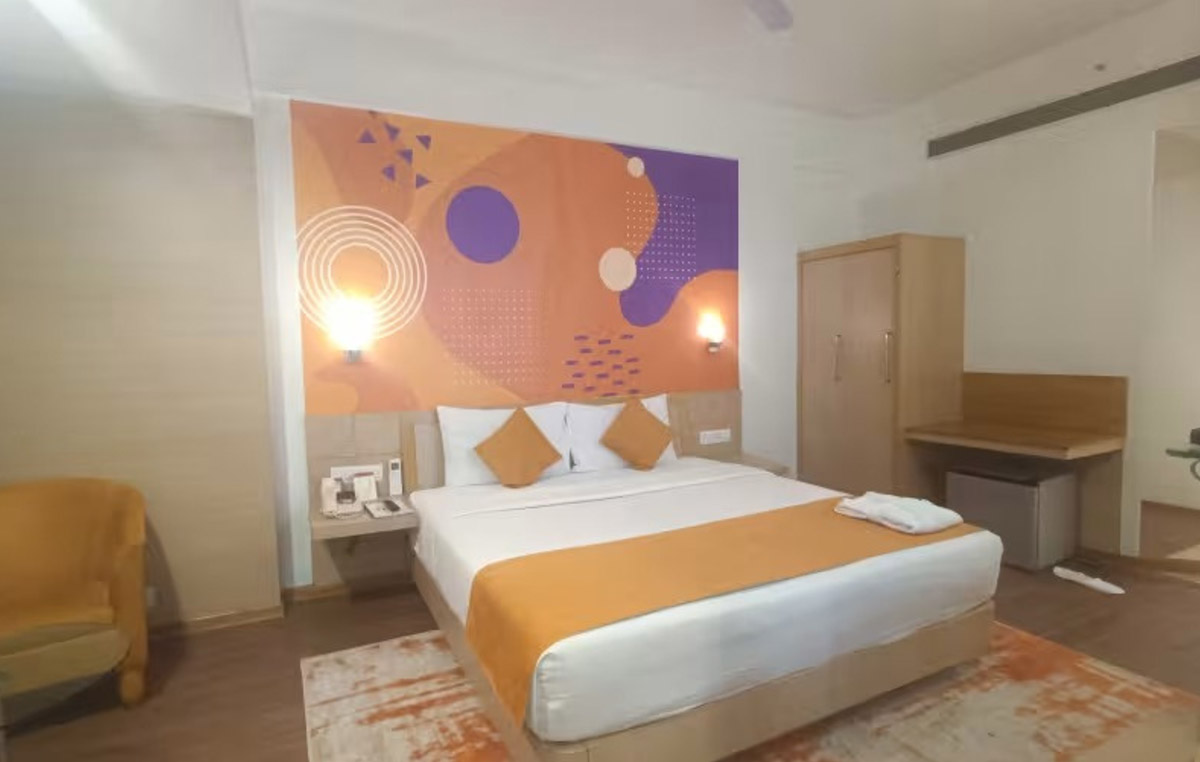
A stay at IRA by Orchid Bhubaneswar starts around 3,500 rupees plus taxes a night for the Bodhi Deluxe Twin, rising through the Premier and Club rooms to about 6,125 rupees for the Suite, varying by season and demand. Bhubaneswar is a good value for a capital city, and booking direct adds the Orchid Rewards discount on top.
Bhubaneswar offers strong value compared with India's bigger tourist cities, and the hotel's rates reflect that. At IRA, the entry Bodhi Deluxe Twin starts around 3,500 rupees plus taxes, the Nirvana and Bodhi Premier and Club Prive rooms sit in the four-thousands, and the Suite tops the range around 6,125 rupees, though the live rate moves with the season, the day and demand, with the cool winter and festival periods busiest.
Beyond the room, the main extras are a hired car for the Konark and Puri day, entry fees at the monuments, and the food, with Odia meals being very affordable. The reliable way to keep the cost sensible is to book direct for the Orchid Rewards discount and any package, and to come in the pleasant winter if you can, accepting that it is the busy season. For the quality of the heritage on offer, Bhubaneswar is one of the better-value cultural trips in India, and a comfortable central stay does not cost a fortune here.
IRA by Orchid Bhubaneswar offers an Orchid Rewards discount of up to 30 percent on direct bookings, along with member benefits, corporate rates and tailored packages for families and event guests. Booking direct on the hotel's own page is the best value and the surest way to get the current Orchid Rewards rate and any live package.
The value advice is the same across the group: book direct. The Orchid Rewards programme gives up to 30 per cent off on direct bookings, plus member benefits and points, and the hotel adds corporate rates and packages for families and event guests, all best accessed directly rather than through a travel site that takes a commission. For the busy winter and festival dates, book well ahead. To get the live discount and current packages, check the latest IRA Bhubaneswar offers and book direct.
For deeper planning, read our focused guides: Bhubaneswar Temples Guide, Konark Sun Temple Trip, Puri Day Trip Guide, Odia Food Guide, Nandankanan Zoo Guide, Odisha Golden Triangle Itinerary.
What are the top things to do in Bhubaneswar?
The top things to do are visiting the Lingaraj, Mukteshwar, Rajarani and
Brahmeswar temples, exploring the Udayagiri and Khandagiri caves, seeing the
Dhauli peace pagoda and the Odisha State Museum, and day-tripping to the
Konark Sun Temple and Puri. Add Nandankanan zoo for families and the Odia
food and crafts.
What is the Golden Triangle of Odisha?
The Golden Triangle is the cultural circuit of Bhubaneswar, Konark and Puri.
From a central Bhubaneswar base, the Konark Sun Temple is about 65
kilometres and 90 minutes away, and Puri is about 60 kilometres and 90
minutes, often combined into one coastal day trip.
How far is IRA Bhubaneswar from the airport and the railway
station?
Biju Patnaik International Airport is about 5 kilometres, a 15-minute drive,
and Bhubaneswar Railway Station is about 1.5 kilometres from the hotel at
Laxmisagar. The NH-5 highway towards Cuttack is about a kilometre away,
making the hotel very well connected.
Can non-Hindus enter the Lingaraj and Jagannath
temples?
The main Lingaraj Temple in Bhubaneswar and the Jagannath Temple in Puri are
open to Hindus only, though Lingaraj has a viewing platform alongside, and
Puri's town, beach and atmosphere are open to all. Many other Bhubaneswar
temples, such as Mukteshwar and Rajarani, are open to everyone.
How far is Konark from Bhubaneswar?
The Konark Sun Temple is about 65 kilometres east of Bhubaneswar, around 90
minutes by road. It is a UNESCO World Heritage site shaped as a giant stone
chariot, and is usually visited as a day trip, often combined with Puri
along the coastal Marine Drive.
Is Nandankanan Zoo worth visiting?
Yes, especially for families. Nandankanan Zoological Park, about 18
kilometres from the hotel, is famous for its white tigers and its lion and
tiger safaris, set in a forest around a lake, with a botanical garden and
reptile park. It is a popular half to full-day out.
What food is Bhubaneswar and Odisha famous for?
Odia food includes the lentil-and-vegetable dalma, the summer fermented-rice
pakhala, fish curries like macha besara, and the famous sweets chhena poda
and rasagola, which Odisha claims as its own. The hotel's restaurant, The
Melting Pot, serves Odia, Indian and international dishes.
When is the best time to visit Bhubaneswar?
October to February is best, with cool, dry, pleasant weather for the
temples, caves and day trips, and the Konark Dance Festival in December. The
Puri Rath Yatra is in June or July. Summer, from March to June, is hot and
humid, and the monsoon, from July to September, is wet.
How many days do you need in Bhubaneswar?
Two to three days is ideal: one for the city's temples, caves and Dhauli,
one for the Golden Triangle day trip to Konark and Puri, and a third for
Nandankanan zoo, the craft villages of Pipili and Raghurajpur, or Chilika
Lake. A central base makes the circuit easy.
Is Bhubaneswar good for business travellers?
Yes. It is a growing capital with IT parks at Infocity and Patia and
commercial hubs around Master Canteen and Sahid Nagar. IRA by Orchid's
central location near the railway, airport and NH-5, with fast Wi-Fi,
workspaces and conference halls, makes it a practical corporate base.
What rooms does IRA Bhubaneswar have?
IRA by Orchid Bhubaneswar has six room categories: the value Bodhi Deluxe
Twin and the compact Nirvana Executive, the spacious Bodhi Premier and
Nirvana Premier, the Club Prive with club-lounge access, and the top Suite,
ranging from about 200 to 400 square feet, all with high-speed Wi-Fi and
smart TVs.
What is the Konark Dance Festival?
The Konark Dance Festival is an annual classical dance festival held each
December near the Konark Sun Temple, featuring Indian classical dance forms
performed in the open air against the heritage backdrop. It is one of
Odisha's most beautiful cultural events and a fine time to visit.
Give the city a day, the Golden Triangle a day, and a third for the zoo, the crafts or Chilika, and base yourself centrally so the driving stays easy. Do that, and Bhubaneswar gives you one of India's richest and calmest cultural trips. When you are ready, book your stay at IRA by Orchid Bhubaneswar.
A/19, Puri - Cuttack Rd, near Jatri
Niwas,
Laxmisagar, Bhubaneswar,
Odisha 751006
Email: reservations@orchidhotel.com
Call: +91 8652 636363