
Bhubaneswar, the Temple City, is best known for the towering Lingaraj Temple, the finely carved Mukteshwar, the sculptural Rajarani and the early Parasurameswar, all in the classic Kalinga style. Lingaraj allows Hindus only, with a viewing platform alongside for others. A cooler morning in the October to March season is the ideal time to explore them.
Bhubaneswar earns its name, the Temple City, once said to have hundreds of shrines, of which a remarkable cluster survives as a living museum of Kalinga temple architecture. For a visitor, the challenge is knowing which to prioritise and how to read what you are seeing. This guide covers the essential temples, what makes each special, the honest access notes, and how to plan a temple tour from a city base.
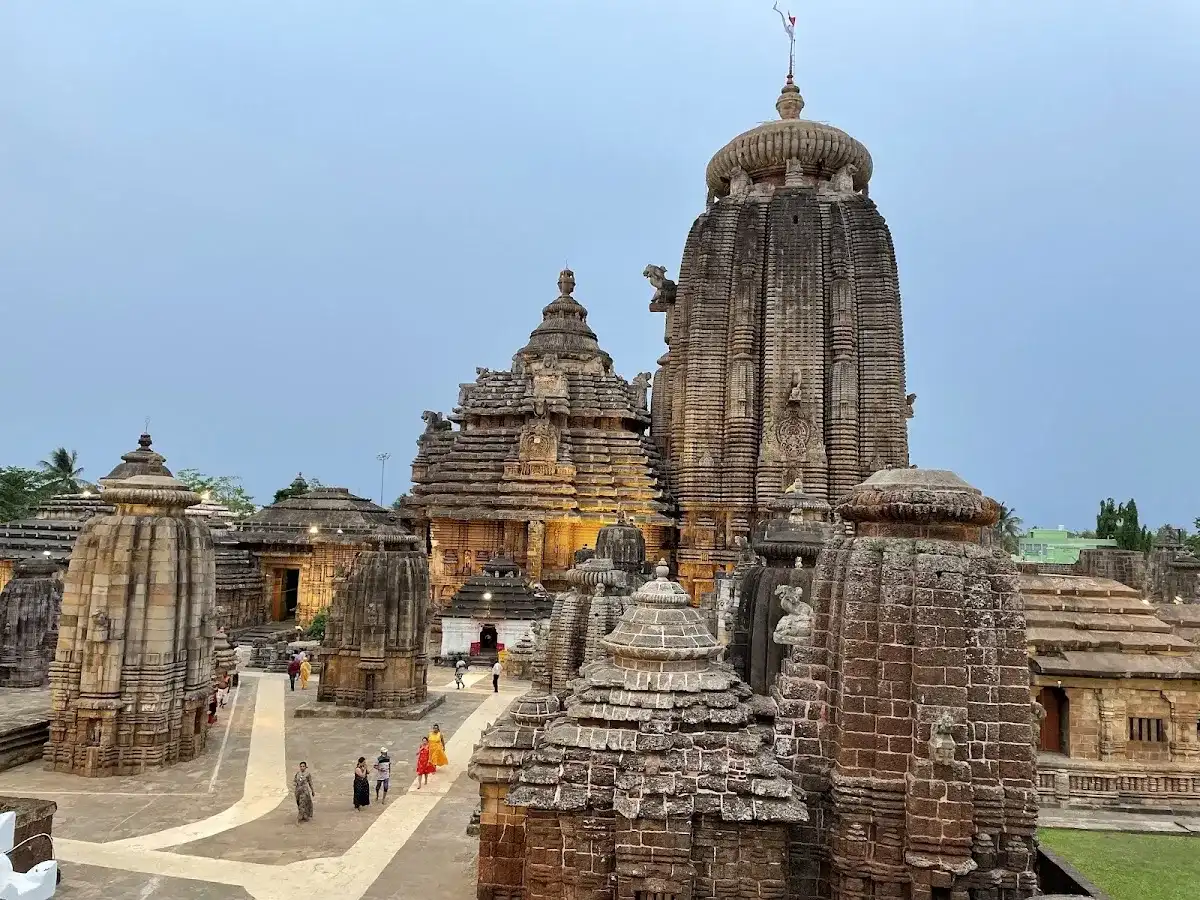
The essential Bhubaneswar temples are the Lingaraj, the great 11th-century Shiva temple that dominates the old town; the Mukteshwar, a small, exquisitely carved gem with its famous arched gateway; the Rajarani, known for its sculpted figures; and the Parasurameswar, one of the oldest. Together, they trace the evolution of Kalinga temple architecture over centuries.
A good temple tour follows the art as much as the faith. The Lingaraj Temple is a giant, an 11th-century Shiva temple whose tall tower dominates the old town and which remains an active, important place of worship. The Mukteshwar Temple is the connoisseur's favourite, small but exquisitely carved, with a celebrated arched torana gateway that is one of the finest pieces of Kalinga sculpture. The Rajarani Temple, built of warm sandstone, is famous for its sculpted figures and the absence of a presiding deity, which lets you focus purely on the carving. The Parasurameswar Temple is among the oldest and best preserved of the early shrines. Seen together, these trace how Kalinga architecture grew from simple early forms to the soaring Lingaraj, which is the real reward of a Bhubaneswar temple tour. Look for the recurring features as you go, the curving spire, the lion motifs and the dancing figures, and the temples start to speak to each other rather than blur into one. To base yourself for it, you can check rooms at the IRA by Orchid Bhubaneswar.
The main Lingaraj Temple admits Hindus only inside, but there is a viewing platform alongside from which non-Hindus can see the complex, so everyone can experience it. Dress modestly at all the temples, remove footwear as required, and be respectful at the actively worshipped shrines. Most of the smaller temples are open to all visitors.
This is the practical point that saves disappointment and shows respect. The Lingaraj Temple, as a major living shrine, admits Hindus only into the inner complex, a long-standing rule, but a viewing platform alongside lets non-Hindus take in the temple and its tower, so it is still well worth the visit for everyone. The other temples on the trail, Mukteshwar, Rajarani, Parasurameswar and most of the smaller shrines, are generally open to all visitors as monuments. Across all of them, dress modestly as you would at any place of worship, be ready to remove footwear where required, keep your voice down at the actively worshipped temples, and ask before photographing inside. Treated with that basic respect, the temple city opens up fully, and the access rules become a small detail rather than an obstacle.
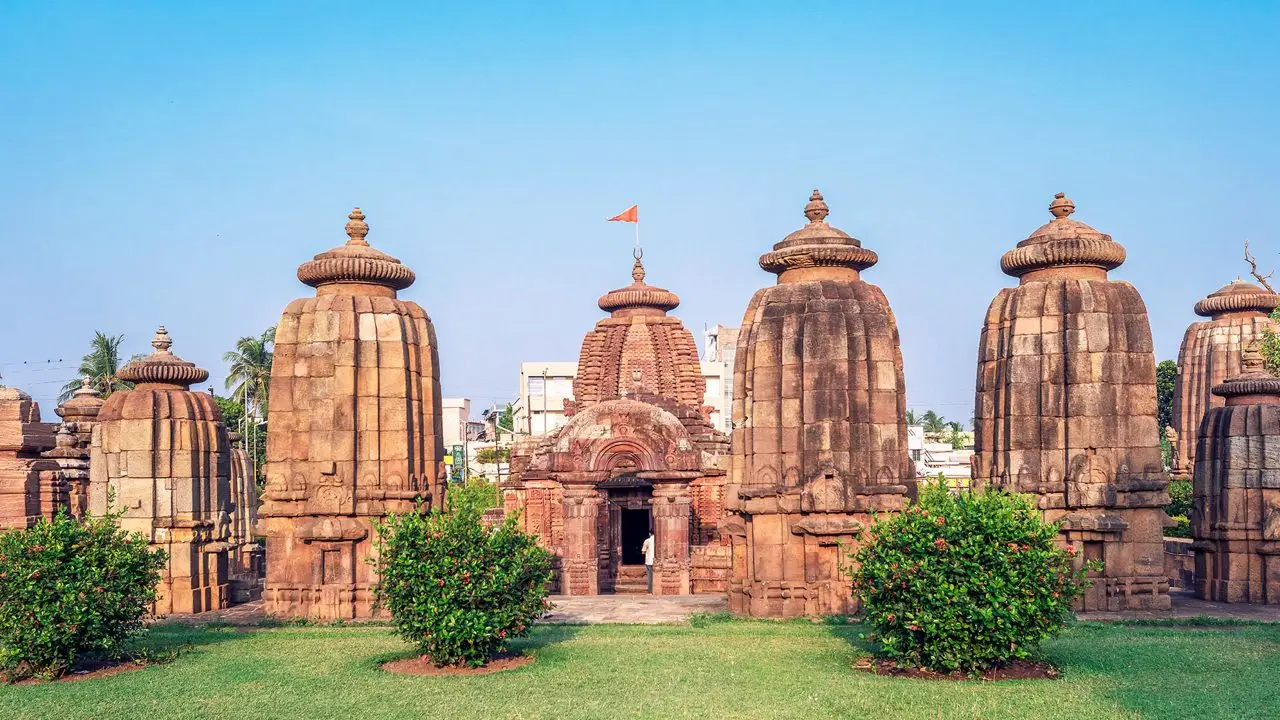
Visit Bhubaneswar's temples on a cooler morning, ideally in the pleasant October to March season, to avoid the heat and humidity. A half to full day covers the main cluster, best done with a hired car or app cabs, as the temples are spread across the old town. Pair the temples with the Udayagiri and Khandagiri caves nearby.
Timing and a sensible route make the tour enjoyable. The temples are best seen on a cooler morning, and the comfortable season is winter from October to March, when Bhubaneswar's heat and humidity ease, which is also the city's pleasant peak. The main temple cluster sits across the old town, so a half to full day with a hired car or app cabs lets you move between Lingaraj, Mukteshwar, Rajarani and Parasurameswar without long walks in the heat. A natural addition is the ancient Udayagiri and Khandagiri caves, the rock-cut Jain caves on the city's edge, which pair well with a temple morning, and the Dhauli peace pagoda, with its Ashokan history, is another easy extension. Start early, carry water, and treat it as a relaxed half-day of heritage rather than a rushed checklist. A central base keeps the whole circuit close. To set up your base, you can see rooms and rates at IRA by Orchid Bhubaneswar.
Bhubaneswar is well connected, with Biju Patnaik International Airport in the city and the main railway station, Central, both close to the Laxmisagar area. IRA by Orchid Bhubaneswar sits near the railway station and airport, so reaching the city and the temple circuit is easy by air, rail or road, with app cabs the simplest way around.
Bhubaneswar is one of the easier eastern cities to reach. Biju Patnaik International Airport is within the city, a short drive from most central areas, and the main railway station is central and well connected across the country, both close to the Laxmisagar area where IRA by Orchid sits. That central position means arrivals are quick, whether you come by air or rail, and the temple circuit, the caves and the wider sights are all within easy reach. Within the city, app cabs and autos are the practical way to move between the temples, which are spread across the old town. Because the hotel is near the station and airport, it makes a convenient base for both a temple tour of the city and day trips out to Konark and Puri. To plan your stay, you can book your Bhubaneswar stay directly.
For a Bhubaneswar heritage trip, book the IRA by Orchid Bhubaneswar directly for the best rate. As part of the Orchid Hotels group, it is covered by Orchid Rewards, giving members up to 30 percent off direct bookings, applied automatically with no promo code. Booking direct also avoids travel-site commissions and gives access to packages.
The value advice is to book direct. IRA by Orchid Bhubaneswar is part of the Orchid Hotels group, so the Orchid Rewards programme applies, giving members up to 30 percent off direct bookings, applied automatically with no coupon to enter, and joining is free. Booking direct also keeps you clear of travel-site commissions and opens up any package, useful for a temple-and-sightseeing trip with breakfast and a central base near the station. The pleasant winter months from October to March are the peak for temple sightseeing, and December brings the Konark Dance Festival nearby, so book your stay ahead of time for those dates. The Melting Pot restaurant and comfortable rooms make an easy return after a day of temples. To get the member rate, you can book your Bhubaneswar stay at the IRA by Orchid.
What are the must-see temples in Bhubaneswar?
The Lingaraj, the great 11th-century Shiva temple; the exquisitely carved
Mukteshwar with its famous arched gateway; the sculptural Rajarani; and the
early Parasurameswar. Together, they trace the evolution of Kalinga temple
architecture and are the heart of the Temple City.
Can non-Hindus enter the Lingaraj Temple?
The inner Lingaraj complex admits Hindus only, but there is a viewing
platform alongside from which non-Hindus can see the temple and its tower,
so everyone can experience it. Most of the other temples on the trail are
open to all visitors as monuments.
How long do you need for the Bhubaneswar temples?
A half to full day covers the main cluster of Lingaraj, Mukteshwar, Rajarani
and Parasurameswar, best with a hired car or app cabs as they are spread
across the old town. Pair them with the Udayagiri and Khandagiri caves
nearby for a fuller day.
When is the best time to visit Bhubaneswar's temples?
A cooler morning in the pleasant October to March season, to avoid the heat
and humidity. December also brings the Konark Dance Festival nearby. Summer
and the monsoon are hot and humid, so the winter months are by far the most
comfortable.
Where should I stay to see the Bhubaneswar temples?
A central base near the station works best. IRA by Orchid Bhubaneswar sits
near the railway station and airport in the Laxmisagar area, with The
Melting Pot restaurant and comfortable rooms, convenient for the temple
circuit and for day trips to Konark and Puri.
Bhubaneswar's temples are a living museum of Kalinga art, best met on a cool morning with a respectful eye. Read our complete guide to Bhubaneswar, and when you are ready, book your stay at IRA by Orchid Bhubaneswar.
A/19, Puri - Cuttack Rd, near Jatri
Niwas,
Laxmisagar, Bhubaneswar,
Odisha 751006
Email: reservations@orchidhotel.com
Call: +91 8652 636363