IRA by Orchid Sambhajinagar Aurangabad: Complete Hotel Guide Near Ajanta & Ellora Caves
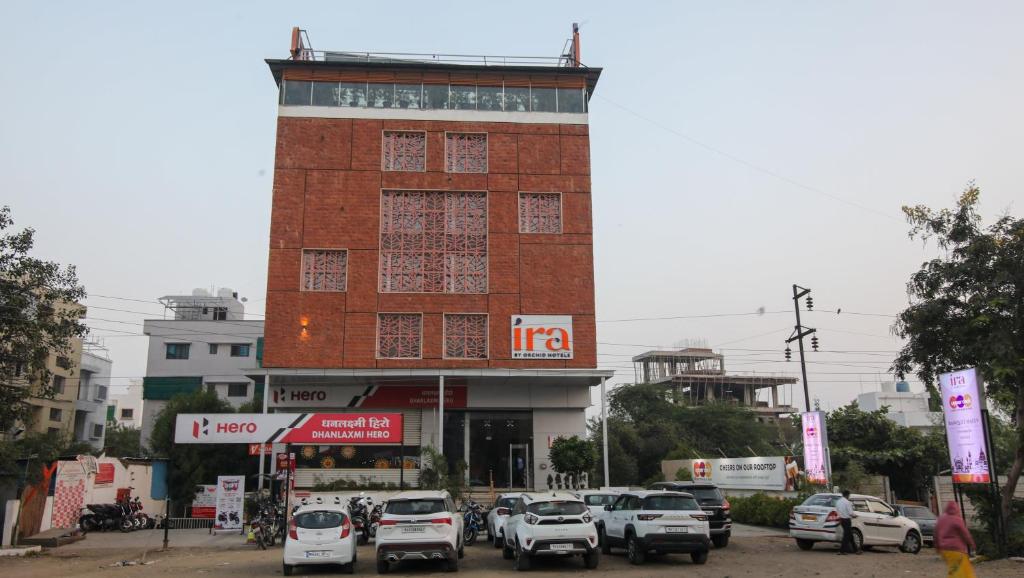
1. IRA by Orchid Sambhajinagar: Maharashtra’s Heritage Capital Deserves Its Best Hotel
IRA by Orchid Sambhajinagar is positioned in the heart of Sambhaji Nagar — the city formerly known as Aurangabad and now officially renamed in honour of the Maratha prince Sambhaji — offering the most practically complete hotel experience in a city that is simultaneously one of India’s most important heritage tourism destinations and one of Maharashtra’s most significant industrial cities. The property combines three room categories (Deluxe, Premier, and Suite), a rooftop restaurant that is one of the city’s distinctive dining experiences, banquet and conference halls for corporate and social events, and a location near the airport with easy access to all of the city’s primary landmarks.
Sambhajinagar’s identity is built on three distinct pillars that generate three equally distinct streams of hotel demand. First: UNESCO World Heritage tourism — the Ajanta Caves (Buddhist rock-cut art and architecture, 2nd century BCE to 6th century CE) and Ellora Caves (Hindu, Buddhist, and Jain architecture, 6th to 11th century CE) are two of the world’s most extraordinary concentrations of ancient art and architecture, driving sustained international and domestic tourist arrivals year-round. Second: industrial and corporate travel — Aurangabad’s Waluj MIDC is one of Maharashtra’s most important industrial zones, hosting Volkswagen India, Skoda Auto, Bajaj Auto, Wockhardt Pharma, and dozens of automotive and pharmaceutical companies. Third: spiritual and cultural travel — the Grishneshwar Jyotirlinga (the 12th and final of India’s 12 sacred Jyotirlingas, adjacent to Ellora), the Aurangabad Dargah of Sufi saint Baba Shah Musafir, and the city’s rich Mughal and Maratha heritage create a cultural depth that few Indian cities match.
This is the most comprehensive guide available for tourists, corporate travellers, event planners, and wedding hosts evaluating hotel options in Sambhajinagar Aurangabad. It covers rooms, the rooftop restaurant, banquet and conference facilities, wedding venues, the Ajanta-Ellora heritage circuit, the city’s industrial and culinary landscape, and how to book at the best available rate.
2. Location and Distances: IRA by Orchid in Sambhajinagar’s Geography
Sambhajinagar sits on the Deccan Plateau at approximately 568 metres elevation, in the rain shadow of the Sahyadri range — a geography that produces the city’s specific climate of warm dry days and cool evenings that make the October-March tourist season particularly pleasant. The city is organised around its Mughal-era core (the Bibi Ka Maqbara, the Aurangabad Caves, and the historic city walls) and its modern industrial and residential extensions (Waluj MIDC to the south, CIDCO to the north). IRA by Orchid is positioned near Chikkalthana Airport, the city’s domestic terminal, providing the practical airport-adjacent positioning that both leisure and business travellers require.
KEY DISTANCES FROM IRA BY ORCHID SAMBHAJINAGAR
- Aurangabad Airport (Chikkalthana): Adjacent | 5–10 minutes | Mumbai, Hyderabad, Delhi connections
- Aurangabad Railway Station: : ~5 km | 10–15 minutes | Intercity rail connectivity
- Bibi Ka Maqbara (Taj of the Deccan): ~3 km | 8–12 minutes | Most visited monument
- Aurangabad Caves (Buddhist, early medieval): ~5 km | 10–15 minutes
- Daulatabad Fort: ~13 km | 20–25 minutes | Most formidable Deccan fort
- Ellora Caves (UNESCO World Heritage): ~30 km | 40–55 minutes
- Grishneshwar Jyotirlinga Temple: ~32 km | 45–60 minutes | 12th Jyotirlinga
- Ajanta Caves (UNESCO World Heritage): ~100 km | 2–2.5 hours
- Waluj MIDC (Volkswagen, Bajaj, Wockhardt): ~12–15 km | 20–30 minutes
- Paithan (Jayakwadi Dam, Paithani weaving): ~55 km | 70–80 minutes | Heritage textile centre
- Nashik: ~100 km | 1.5–2 hours
- Pune: ~240 km | 3.5–4 hours
- Mumbai: ~340 km | 5–6 hours by road | 45–60 minutes by flight
The airport proximity is the most operationally significant location fact for IRA by Orchid Sambhajinagar. Sambhajinagar’s Chikkalthana Airport receives flights from Mumbai (multiple daily), Hyderabad, Delhi, and Pune, making it a genuinely fly-in heritage tourism destination for the segment of international and domestic tourists who want to experience Ajanta and Ellora without the road journey from Pune or Mumbai. Being adjacent to the airport means that an afternoon Mumbai flight landing at 4 PM has the traveller at IRA by Orchid by 4:30 PM — with a full evening for the rooftop restaurant dinner and an early 7 AM departure for Ellora the next morning.
The Ellora proximity at 30 km is the heritage tourism anchor. At 40-55 minutes by road, Ellora is the most accessible UNESCO World Heritage Site in the Sambhajinagar day-trip radius and the one that most travellers prioritise on a first visit. The Grishneshwar Jyotirlinga, immediately adjacent to Ellora, means that a day trip to Ellora is also a Jyotirlinga pilgrimage visit — a combination of UNESCO heritage and spiritual significance unique to this corridor. Daulatabad Fort at 13 km can be added as an extension to the Ellora day trip on the same road. Ajanta at 100 km requires a separate full day.
3. Hotel Rooms in Aurangabad: Three Categories at IRA by Orchid Sambhajinagar
IRA by Orchid Sambhajinagar offers three room categories covering the full range of visitor profiles — from the solo business traveller on a single-night industrial visit to the international tourist couple on a multi-night Ajanta-Ellora circuit to the wedding host family requiring the suite for the bridal party.
Deluxe Room — 264 sq. ft. The Deluxe Room at 264 sq. ft. is the standard entry category, equipped for both business and leisure use. At 264 sq. ft., it is meaningfully larger than equivalent rooms at many Aurangabad mid-range competitors, providing comfortable movement space for guests with luggage from multi-day heritage tours. Amenities: split air conditioning, flat-screen TV with satellite channels, high-speed Wi-Fi (room-level), ergonomic work desk, electric kettle, in-room safe, wardrobe, and attached bathroom with 24-hour hot water, shower, and complimentary toiletries. The most accessible rate category for hotel booking in Aurangabad.
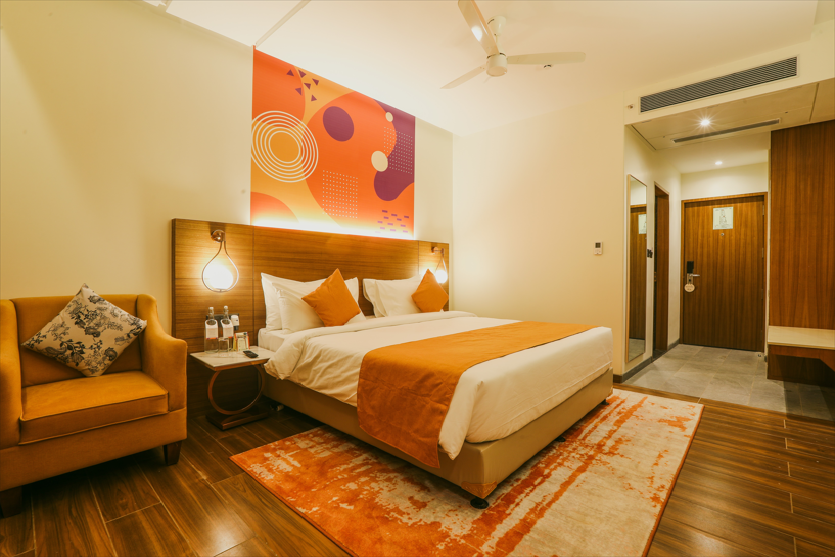
Premier Room — 320 sq. ft. The Premier Room at 320 sq. ft. is the most popular category at IRA by Orchid hotel in Sambhajinagar for multi-night heritage tourism stays and business visitors spending two or more nights in the city. The additional 56 sq. ft. over the Deluxe provides meaningful comfort for extended stays: adequate space to lay out camera equipment from a day at Ajanta, a proper seating area separate from the work desk, and the room dimension that makes a three-night Aurangabad stay genuinely comfortable rather than merely functional. Same amenity specification as the Deluxe, with the larger footprint as the primary differentiator. Recommended for couples on the heritage circuit and senior corporate visitors.
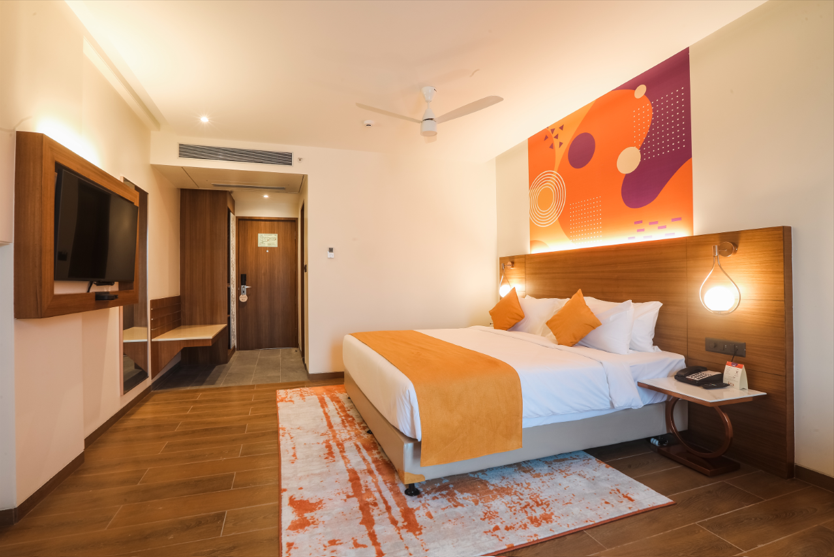
Suite Room — 442 sq. ft. The Suite at 442 sq. ft. is the hotel’s premium category, with a separate living area distinct from the bedroom. This layout makes the Suite the most versatile room at the property: it functions as the bridal room for wedding bookings, as a VIP room for senior executives who receive clients in the room, as the most comfortable option for couples on extended Aurangabad stays, and as the correct room for international tourists who want to process the visual experience of a full day at Ajanta or Ellora in a genuinely spacious environment. The separate living area functions as a meeting space for one-on-one business discussions without requiring a formal conference room booking.
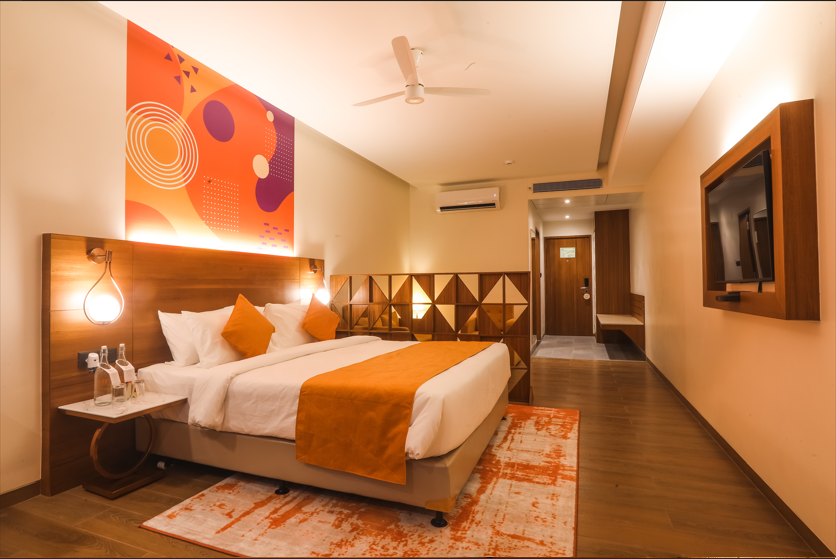
All rooms at IRA by Orchid Sambhajinagar include complimentary high-speed Wi-Fi, 24-hour room service, 24-hour front desk, and access to all hotel facilities including the rooftop restaurant and event spaces. The direct booking engine guarantees the best available rate for all categories.
4. The Rooftop Restaurant in Aurangabad: IRA by Orchid’s Signature Dining Experience
The rooftop restaurant at IRA by Orchid, a hotel in Sambhajinagar, is one of the most distinctive dining experiences available in Aurangabad. The city’s Deccan Plateau topography — flat to the south, rising gently toward the Aurangabad hills and caves to the north — makes elevated dining a qualitatively different experience from ground-floor restaurant settings. The Aurangabad cave ridge, visible from elevated points on clear evenings, and the city’s distinctive skyline give the rooftop a specific visual identity that no other Aurangabad dining venue replicates.
The rooftop restaurant menu at IRA by Orchid is built around the specific culinary identity of Sambhajinagar: a city whose food culture sits at the intersection of three distinct traditions. The Marathwada Hindu tradition contributes the flatbread and lentil cooking of the Deccan interior — Jowarichi Bhakri (jowar flatbread), Shengdanyachi Chutney (peanut chutney), Bharit (charcoal-roasted aubergine mash), and Kombdi Vade (spiced chicken with puffy fried bread). The Hyderabadi-Mughal tradition contributes the non-vegetarian heritage of Aurangabad’s Muslim community: Aurangabadi Biryani (distinct from Hyderabadi Biryani in its use of Marathwada spice profiles and its specific rice technique), Naan Qalia (tender lamb curry with Aurangabadi-style bread), Shikampuri Kebab, and Haleem (particularly during Ramadan, when Aurangabad’s haleem is considered among the finest in Maharashtra). And the contemporary Indian multi-cuisine section covering North Indian, South Indian breakfast items, Chinese-Indian, and Continental options for guests who prefer familiar formats.
The breakfast service at the rooftop covers both Indian (idli, vada, paratha, poha, upma) and Continental (eggs, toast, cereal, fruit) options from 7 AM, making it practical for heritage tourists departing early for Ellora (40-55 minutes) or Ajanta (2+ hours). The dinner service on the rooftop is the hotel’s primary evening social experience: the combination of the Deccan evening sky, the city’s ambient light, and the specific pleasure of the Aurangabadi-Mughal menu makes this one of the better evenings available to a traveller in central Maharashtra.

5. The Ajanta and Ellora Caves: What IRA by Orchid Guests Come to Sambhajinagar to See
The UNESCO World Heritage Sites of Ajanta and Ellora are the primary reason most tourists visit Sambhajinagar. Together they constitute one of the world’s most extraordinary concentrations of ancient art and architecture — two completely distinct sites, separated by 70 km, each representing a different era and tradition of Indian artistic and spiritual achievement.
Ajanta Caves: Buddhist Painting at Its Highest Expression
The Ajanta Caves are 30 rock-cut Buddhist monasteries and prayer halls carved between the 2nd century BCE and the 6th century CE into the horseshoe-shaped cliff of the Waghora River gorge, 100 km from IRA by Orchid, one of the best hotels in Sambhajinagar. The caves are decorated with the finest surviving examples of ancient Indian painting: the Ajanta murals, executed in tempera on a lime plaster ground over a period of approximately eight centuries, depict Jataka tales (stories of the Buddha’s previous lives), royal court scenes, celestial beings, and the specific sensory world of 5th-6th century Indian culture with a narrative specificity and technical quality that has no parallel in the ancient world.
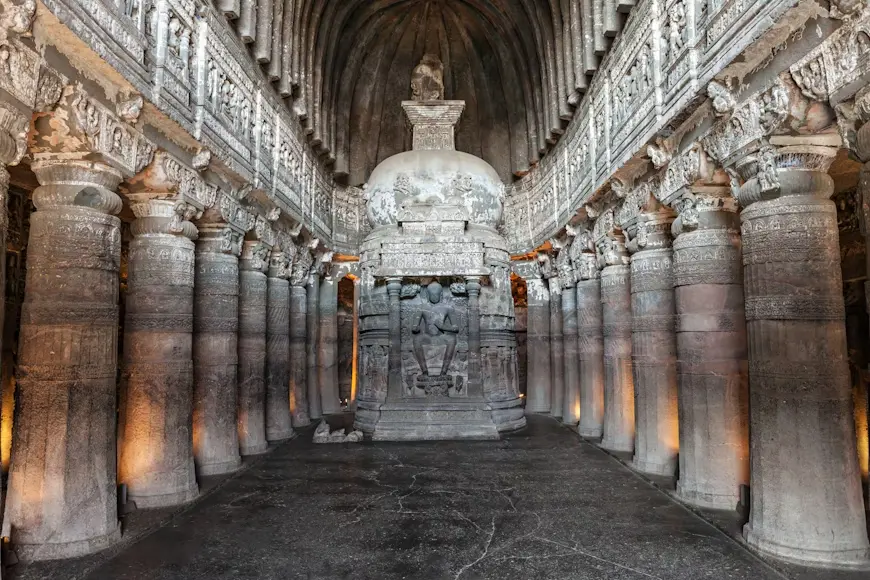
UNESCO inscribed the Ajanta Caves as a World Heritage Site in 1983. The most important caves for first-time visitors: Cave 1 (Mahayana monastery with paintings depicting the Bodhisattva Avalokitesvara and the famous black princess scene); Cave 2 (extraordinary painted ceiling, the best-preserved narrative painting cycle in the complex); Cave 9 and 10 (the earliest Hinayana chaitya halls, with the oldest paintings in the complex); Cave 16 (contains the dying princess, one of the most celebrated individual figures in Indian art); Cave 17 (the richest painting programme of any cave, the Flying Apsara and Simhala Avadana narrative among the highlights); and Cave 26 (the largest chaitya, with the reclining Mahaparinirvana Buddha of exceptional sculptural quality).
Practical information:
Ajanta Caves are closed on Tuesdays. From IRA by Orchid hotel in Sambhajinagar, depart by 7-7:30 AM to arrive by 9:30-10 AM. Allow 4-5 hours for a thorough visit. The caves require approximately 3 km of walking on uneven surfaces. A viewpoint at the top of the gorge opposite the caves offers the only perspective from which the full horseshoe-shaped arrangement is visible — visit this before entering the individual caves. MTDC has a restaurant at the site for lunch.
Ellora Caves (30 km):
The Ellora Caves are 34 rock-cut temples, monasteries, and hermitages carved between the 6th and 11th centuries CE into a 2 km stretch of the Charanandri hills, 30 km from IRA by Orchid hotel in Sambhajinagar. Unlike Ajanta (entirely Buddhist), Ellora represents three religious traditions carved in sequence: Buddhist caves (caves 1-12, 6th-8th century), Hindu caves (caves 13-29, 6th-9th century), and Jain caves (caves 30-34, 9th-11th century). This multi-religious character — unique among India’s major rock-cut sites — reflects the specific political history of the Deccan, where the successive Chalukya, Rashtrakuta, and Yadava dynasties patronised art and architecture across religious boundaries.
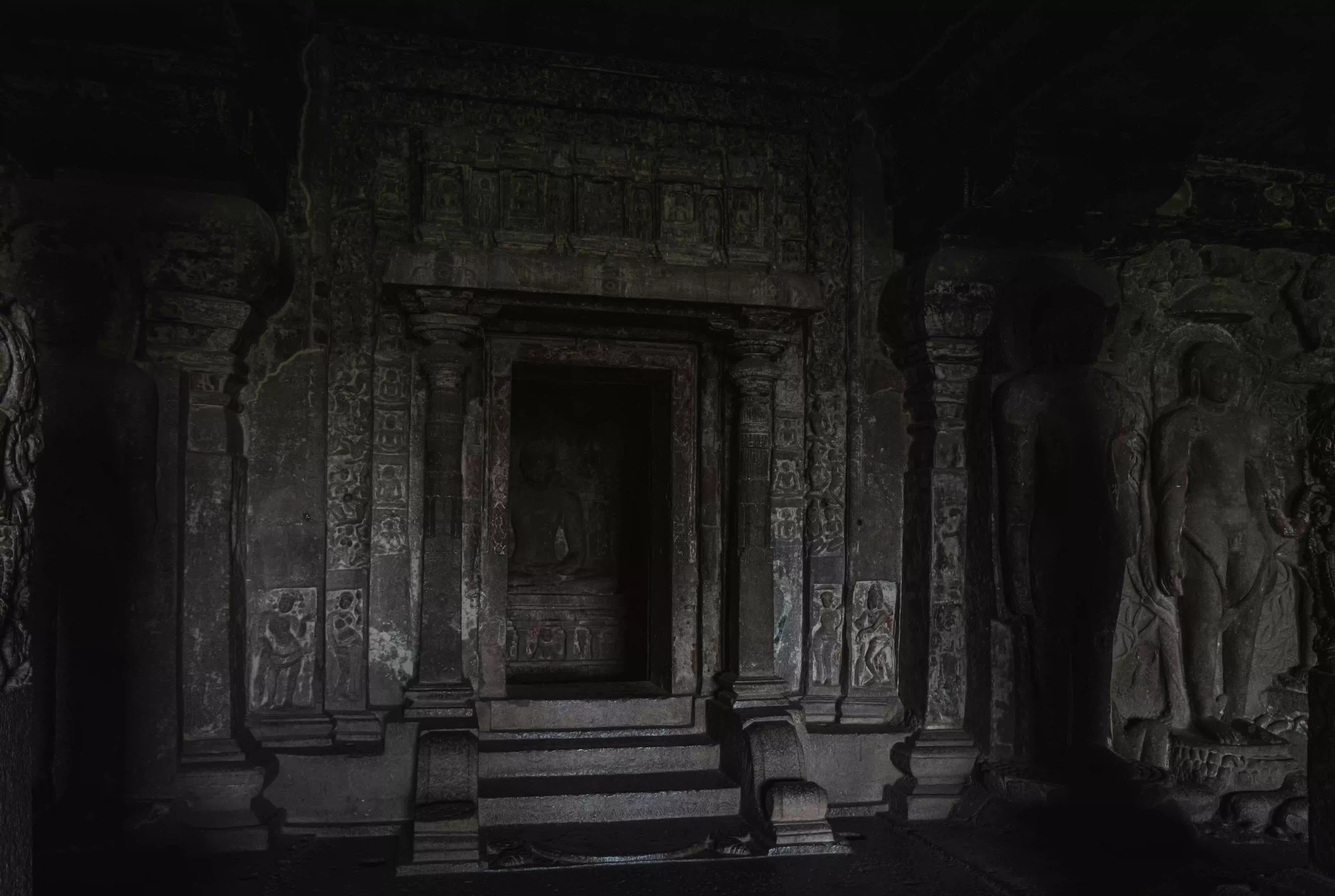
The centrepiece of Ellora is Cave 16, the Kailasa Temple: a monolithic rock-cut temple dedicated to Shiva, carved entirely from a single volcanic basalt outcrop by quarrying downward and outward from the top of the cliff to produce a free-standing temple complex covering more area than the Parthenon in Athens and standing as tall as a four-storey building. The entire structure — gopura (gateway tower), nandi mandapa (assembly hall for Shiva’s bull), main sanctuary tower, subsidiary shrines, courtyard, and connecting galleries — was carved from a single piece of rock by approximately 7,000 workers over a century under Rashtrakuta patronage from around 757 CE. It is considered one of the greatest architectural achievements in human history.
Practical information:
Ellora Caves are closed on Tuesdays (same as Ajanta; plan your itinerary accordingly). From IRA by Orchid Sambhajinagar, depart by 8 AM to arrive by 9 AM. Allow 3-4 hours for the main circuit (Cave 16 Kailasa Temple, Buddhist caves 1-12, Jain caves 30-34). The Grishneshwar Jyotirlinga Temple is a 5-minute auto ride from Ellora — include it on the same day trip. Daulatabad Fort at 13 km (opposite direction from Ellora on the same road) can be visited on the return journey.
6. Bibi Ka Maqbara and the City Monuments: Sambhajinagar’s Urban Heritage
Within the city itself, IRA by Orchid, Sambhajinagar hotel guests have access to a rich set of urban heritage experiences without leaving Aurangabad’s metropolitan limits.
Bibi Ka Maqbara (3 km from the hotel):
Built in 1660 by Prince Azam Shah as a tribute to his mother Dilras Banu Begum (wife of Emperor Aurangzeb), the Bibi Ka Maqbara is modelled on the Taj Mahal and is the most photographed monument in the Deccan outside Agra. The marble on the four minarets and the central plinth was brought from Rajasthan; the rest of the structure is lime-plaster over brick, which accounts for the slight differences in proportion and surface quality from the original. The formal gardens (Char Bagh layout) and the fountain channel that reflects the mausoleum dome create an extraordinarily beautiful composition at dawn and dusk.
Aurangabad Caves (5 km):
Twelve rock-cut Buddhist caves of the early medieval period carved into the north-facing ridge above the city. Less visited than Ajanta and Ellora, and therefore quieter and more contemplative. Cave 7 is the most artistically significant, with a row of female figures flanking the main Buddha image that represent the high point of Aurangabad’s own distinct sculptural tradition.
Daulatabad Fort (13 km):
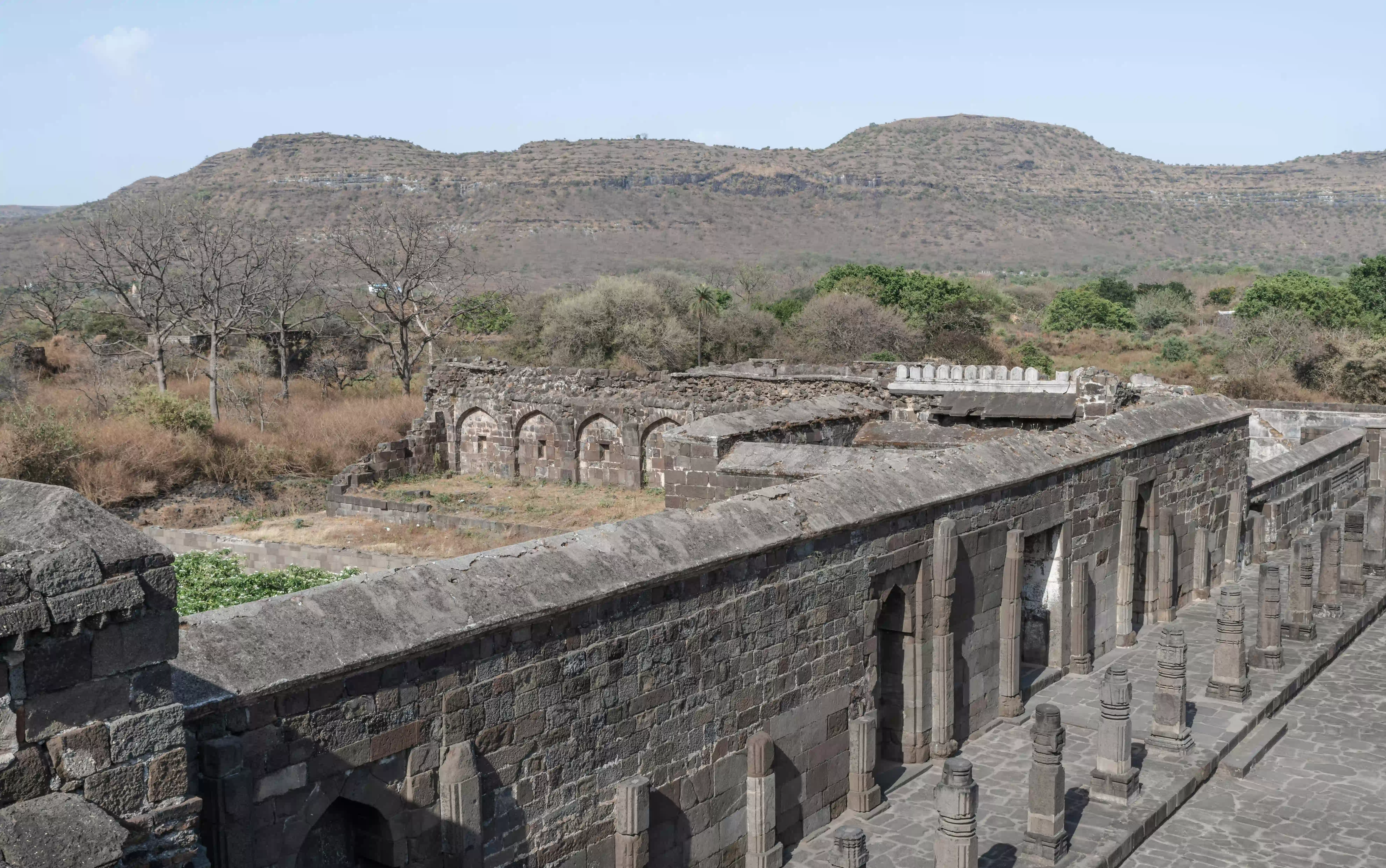
Originally named Devagiri (City of the Gods), this hill fort was the capital of the Yadava dynasty before Muhammad bin Tughluq briefly made it the capital of the Delhi Sultanate in 1327. The fort’s defensive system is extraordinary: seven concentric walls, a deep moat carved from solid rock, a dark labyrinthine passage designed to disorient attacking armies (guides carry torches, and the passage genuinely disorients even in peacetime), and a hilltop citadel accessible only by a single steep path. It is one of the most architecturally interesting medieval fort complexes in India.
7. Grishneshwar Jyotirlinga: The 12th Sacred Shiva Temple Near Aurangabad
Adjacent to the Ellora Caves, approximately 32 km from IRA by Orchid Sambhajinagar, stands Grishneshwar Temple — the 12th and final of the 12 Jyotirlingas of Hinduism. For Shaivite pilgrims undertaking the complete Jyotirlinga circuit (which spans sites from Somnath in Gujarat to Kedarnath in Uttarakhand), Grishneshwar is the culminating site. The temple was rebuilt in the 18th century under the patronage of Ahilyabai Holkar, the Maratha ruler of Indore whose temple renovation programme also rebuilt Kashi Vishwanath, Somnath, and Trimbakeshwar. The current structure is a Nagara-style temple of red Yeola stone, with a carved shikhara and a sanctum housing the Jyotirlinga in the form of a natural Swayambhu (self-manifested) linga.
Practical combining of Ellora and Grishneshwar: from Ellora, the Grishneshwar Temple is a 5-minute auto-rickshaw ride. The logical sequence for a day trip from IRA by Orchid: depart hotel at 7:30 AM, arrive Ellora by 8:30 AM, spend 3-4 hours at Ellora including Kailasa Temple, auto to Grishneshwar for darshan (45-60 minutes), drive 13 km to Daulatabad Fort (1.5 hours), return to hotel by 5-6 PM. This is one of the most content-rich single-day heritage itineraries available anywhere in India.
8. Sambhajinagar’s Industrial Economy: Corporate Travel at IRA by Orchid
Aurangabad’s Waluj MIDC is Maharashtra’s most important industrial zone outside the Mumbai-Pune corridor. The anchor companies define the industrial character of the city: Volkswagen India and Skoda Auto India (joint production facility producing the Polo, Vento, Kushaq, Slavia, and related models for the Indian market); Bajaj Auto (one of India’s largest two-wheeler and three-wheeler manufacturers, with major Waluj assembly lines); Wockhardt Pharmaceuticals (major API and formulations manufacturing); Endress+Hauser (Swiss industrial instrumentation); and dozens of Tier-1 automotive component manufacturers supplying the VW-Skoda and Bajaj lines.
For corporate travellers visiting these companies, IRA by Orchid Sambhajinagar provides: airport proximity for fly-in executives from Mumbai, Pune, and Delhi; 20-30 minute road access to Waluj MIDC; reliable Wi-Fi for remote working; the rooftop restaurant for client dinners; and conference facilities for on-site meetings. The airport proximity is particularly valuable for senior Volkswagen and Skoda executives from the German and Czech headquarters who fly into Chikkalthana Airport for Waluj plant visits — a hotel adjacent to the airport eliminates the commute that would otherwise add to an already demanding travel schedule.
9. Banquet Halls and Wedding Venues in Aurangabad at IRA by Orchid
Aurangabad’s wedding and social events market reflects the city’s dual cultural heritage. The Marathwada Hindu wedding tradition follows the specific rituals and celebration formats of the Marathwada region — distinct from coastal Konkan and Pune-area traditions in its specific regional preparations and the multi-day Maratha community celebration structure. The Muslim wedding tradition in Aurangabad follows the Hyderabadi-Deccani Nikah and Walima format, with the specific culinary heritage of Aurangabadi biryani, Sheer Korma, and the elaborate non-vegetarian banquet menu that Aurangabad’s professional catering community has perfected over generations.
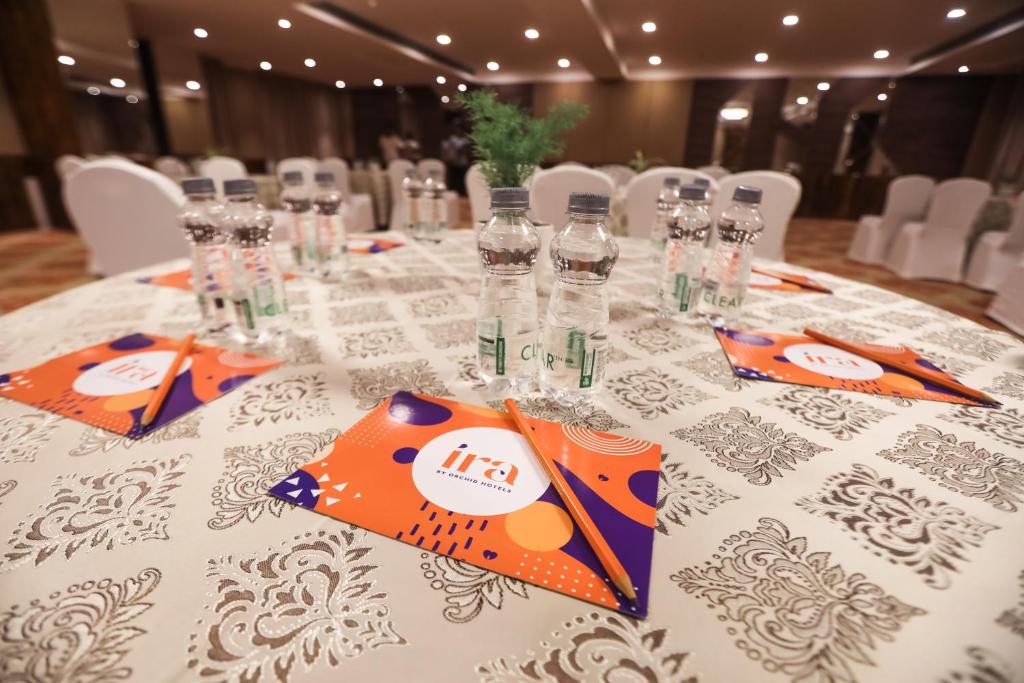
IRA by Orchid’s banquet and wedding facilities are equipped for both traditions. The catering team handles both the vegetarian Marathwada wedding menu and the non-vegetarian Hyderabadi-Mughal format with equal expertise. The Suite Room serves as the bridal suite for wedding bookings. Block room arrangements for outstation guests arriving at Chikkalthana Airport or by road from Pune and Mumbai are standard for wedding bookings.
- Multiple hall configurations: boardroom, classroom, theatre (up to 150 guests)
- Full A/V support: LED projector, screen, lapel and podium microphones, HDMI
- Rooftop available for cocktail hour and pre-reception gathering
- On-site catering: Marathwada vegetarian, Hyderabadi non-vegetarian, Continental
- Block room arrangements for wedding party and outstation guests
- Airport proximity: guests from Mumbai fly in, hotel in 10 minutes
10. Aurangabad’s Food Culture: What to Eat in the City of Bibi Ka Maqbara
Aurangabad’s food culture is one of the most distinctive in Maharashtra and one of the least documented. The city’s Mughal administrative heritage, its position as the seat of Aurangzeb’s Deccan campaign, and its subsequent role as a market town on the road between the Deccan Sultanates and the Maratha empire have produced a food culture of extraordinary hybridity.
Aurangabadi Biryani:is the city’s most celebrated preparation and the primary food experience visitors seek. It is distinct from Hyderabadi Biryani in three specific ways: the use of Marathwada red chilli (which produces a different heat profile from the Hyderabadi variety), the inclusion of groundnut in some traditional preparations (reflecting the local agricultural influence), and the specific local rice variety (Govind Bhog or Kolam rice, producing a different texture from Hyderabadi Basmati-based biryani). The best Aurangabadi Biryani is found in the old city near the Aurangabad market area, accessible from IRA by Orchid in 15-20 minutes.
Naan Qalia: is the second most celebrated Aurangabadi preparation: a slow-cooked lamb curry with specific Deccani-Mughal spice notes served with the distinctive Aurangabadi naan bread (larger, slightly leavened, cooked in a tandoor and brushed with ghee). Shikampuri Kebab: (minced lamb stuffed with a yogurt and herb filling, shallow-fried to a golden crust) is the starter that anchors every formal Aurangabadi meal. The rooftop restaurant at IRA by Orchid incorporates these preparations into its menu alongside the broader multi-cuisine offering.
11. Hotel Offers and How to Book at the Best Rate in Aurangabad
The best rate for hotel rooms at IRA by Orchid Sambhajinagar is available through direct booking. Flash sale promotions reducing room rates by 15-30% are published on the Offers page. For heritage tourism, the October-March period is peak season — early booking is recommended. The Aurangabad winter (November-January) is the optimal visiting window: daytime temperatures of 22-28°C, clear skies ideal for cave photography, and the specific quality of winter light that makes the Bibi Ka Maqbara and Ellora’s stone surfaces photographically at their best. Avoid the May-June window when the Deccan Plateau temperatures reach 40-42°C.
12. Verified Guest Reviews
“Stayed for 3 nights for the Ajanta-Ellora circuit. Premier Room was comfortable, rooftop dinner on Day 1 was genuinely good — the Aurangabadi Biryani was the right introduction to the city’s food.” — Google Verified Guest
“Two-day corporate visit to Waluj plant. Airport proximity was the reason we booked — evening flight in, 10 minutes to hotel, morning meeting, done. Rooftop restaurant made the evenings worthwhile.” — TripAdvisor Verified Guest
“Hosted our daughter’s wedding function here. Catering team understood exactly what an Aurangabadi Nikah banquet requires. Guests from Mumbai were at the venue 20 minutes after landing.” — Google Verified Guest
“First time at Ajanta — woke up at 6:30 AM, hotel breakfast, at the site by 9 AM. The early start is everything for Ajanta. IRA by Orchid made that schedule practical.” — TripAdvisor Verified Guest
13. Frequently Asked Questions – Best Hotel in Aurangabad / Sambhajinagar
Book Now – Best Rate Guaranteed
Ready to experience the best of Sambhajinagar?
Book
Directly at IRA by Orchid Sambhajinagar for the best
available rates and exclusive offers.